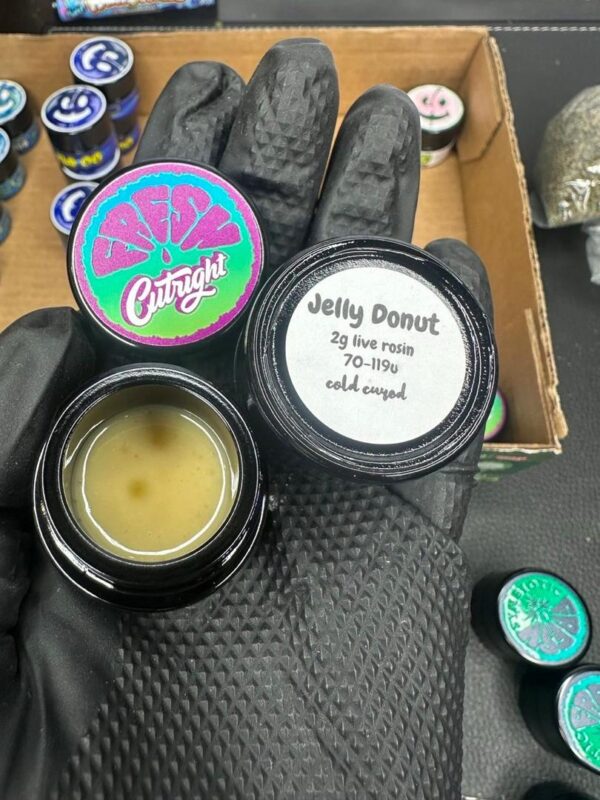
🍩🧊 Jelly Donut Cold Cure Live Rosin: The Complete Buyer’s Guide
Jelly Donut Cold Cure Live Rosin Overview
🍩 Cold cure live rosin is the version of rosin that rewards patience, and this Jelly Donut batch from Fresh Squeeze is a good example of why. It starts the same way most premium live rosin does, fresh frozen flower washed into bubble hash within hours of harvest, then pressed. What happens after the press is what earns it the “cold cure” name: instead of jarring it and shipping it out the same day, the rosin gets sealed and left to rest at a controlled cool temperature for weeks before it ever reaches a customer.
Jelly Donut itself is an indica-dominant hybrid bred by Raw Genetics, a cross of Purple Punch and French Toast. It’s known for grape, sage, and berry flavors with a pinene-forward terpene profile, and effects users often describe as giggly, hungry, and sleepy, the kind of profile that fits an evening wind-down more than a morning session. Pressed into a cold cure live rosin, that flavor gets concentrated and locked in place rather than fading the way it can in flower over time.
🔬 How Cold Cure Live Rosin Is Made
Cold cure live rosin starts exactly like fresh press: fresh frozen Jelly Donut flower goes into an ice water wash, gets agitated gently through a series of micron mesh bags, and comes out as bubble hash. That hash is freeze-dried to the right moisture level, then pressed under low heat and light pressure. Up to that point, cold cure and fresh press are the same product.
The difference happens next. Instead of packaging the rosin immediately, it goes into a sealed jar and rests at a controlled temperature, generally somewhere between 45°F and 70°F, for three to four weeks, sometimes longer depending on the batch. During that stretch, the terpenes naturally separate and rise to the top of the jar. Once the cure is finished, the rosin gets whipped gently to fold those terpenes back in and homogenize the texture, which is what gives cold cure live rosin its signature creamy, badder-like consistency.
That resting period matters more than people expect. Cold cure live rosin that’s rushed tends to separate again after packaging or never fully stabilizes. Done right, it holds its texture at room temperature far better than fresh press, which is one of the main reasons people are willing to pay more for it.
Cold Cure Rosin and What “Fully Cured” Actually Means
Cold cure rosin is often talked about like a single step, but it’s really a range. A jar can technically be called cured at three weeks and still be developing at six. The best cold cure live rosin batches are the ones a maker doesn’t rush off the shelf early just to fill an order. Fresh Squeeze holds every batch of this Jelly Donut press for a minimum cure window before it’s approved for jarring, which is the difference between a rosin that’s merely resting and one that’s actually finished.
👃 Aroma
Jelly Donut cold cure live rosin opens with a wave of grape and light berry, backed by an herbal, sage-like undertone that keeps the sweetness from tipping into candy territory. There’s a soft bakery note underneath, more warm dough than frosting, which is where the “donut” half of the name earns its keep. It’s a rounder, less sharp aroma than a lot of citrus-forward rosins on the shelf.
👅 Flavor
The flavor mirrors the smell closely, grape and berry up front, a gentle herbal bitterness in the middle from the pinene, and a soft, doughy sweetness that lingers after the exhale. It reads more dessert-adjacent than dessert-forward, complex enough that it doesn’t get one-note after a few dabs.
🌬️ Inhale & Exhale Experience
The inhale is smooth and full, typical of a properly cured badder texture, no harsh edges even at moderate dab temperatures. The exhale is where the cold cure process shows its value most, thick, slow-rolling clouds that carry the grape and sage notes well past the point most fresh press rosins would have already faded. It’s a longer, more layered exhale than the same strain pressed and jarred same-day.
🧪 Rosin Quality Details
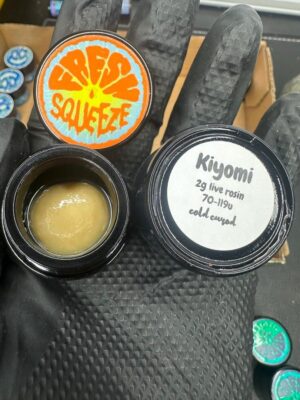
 Quality on a cold cure live rosin comes down to how evenly it cured and how clean it pulls on a hot nail. This batch shows a light gold color, consistent with fresh frozen starting material, and a full melt with minimal residue left behind. Texture holds an even, creamy badder consistency with no visible separation, a sign the cure ran its full course before whipping.
🌿 Terpene Profile
Pinene leads the profile here, which tracks with Jelly Donut’s genetics and explains the herbal, sage-forward edge in both the smell and flavor. Caryophyllene adds a peppery depth, myrcene rounds out the sweetness, and small amounts of limonene and humulene fill in brightness and earthiness underneath. As with potency, treat these as typical figures and confirm against the actual batch COA.
✨ Features
- Pressed from fresh frozen Jelly Donut flower
- Fully cold cured, 3 to 4 weeks minimum before jarring
- 100% solventless, ice water and mesh only
- Creamy, stable badder texture that holds at room temperature
- No cutting agents, fillers, or added terpenes
- Available in 1g and 2g jars
⭐ Product Highlights
- Grape, berry, and sage flavor with a doughy, dessert-adjacent finish
- Pinene-forward terpene profile, uncommon among sweeter live rosins
- Room-temperature shelf stability thanks to the full cold cure
- Indica-dominant effects suited to evening use
- Small-batch cured, not rushed to shelf
🏆 Why Customers Choose Fresh Squeeze Cold Cure Rosin
Fresh Squeeze built its cold cure live rosin line around the idea that rushing a cure defeats the purpose of making one at all. Customers who choose this line over fresh press alternatives usually cite the same handful of reasons: the texture holds up outside the fridge, the flavor doesn’t fade as fast between the first dab and the last, and the whipping step at the end of the cure produces a consistency that’s easier to work with than a stiff, cold fresh press straight off a cold slab. For a strain like Jelly Donut, where the appeal is largely about flavor complexity, giving the terpenes time to settle back into the oil rather than pressing and shipping same-day makes a real difference in the jar.
🛒 Jelly Donut Cold Cure for Sale
Jelly Donut cold cure for sale batches move slower than fresh press releases, simply because the cure window adds weeks to the production timeline before anything is ready to jar. That’s part of what separates a genuine cold cure live rosin from something rushed and relabeled. When you see Jelly Donut cold cure for sale from Fresh Squeeze, it means that batch has already cleared its full rest period, been whipped, and passed a texture check, not that it was pressed and packaged the same week.
⚖️ 2g Cold Cure Live Rosin
For anyone going through concentrate regularly, a 2g cold cure live rosin jar is usually the better value over buying two separate 1g jars, and it means fewer trips back to the dispensary. The tradeoff is exposure, a larger jar gets opened more times over its life, so portioning matters more here than with a 1g. Split a fresh 2g jar into two smaller airtight containers as soon as you get it home if you’re not going through it within a couple of weeks, that limits how often the bulk of the jar sees room-temperature air.
🇺🇸 Best Live Rosins for Sale in Michigan
Michigan’s adult-use market is one of the largest and most competitive in the country, which means shelf space for live rosin is crowded and buyers have real options. Among the best live rosins for sale in Michigan, cold cure batches tend to stand out for exactly the reason described above: stability. A rosin that’s already fully cured before it hits a Michigan dispensary shelf is going to look and dab the same on day one as it does a month later, which isn’t something every fresh press product can promise once it leaves cold storage. Michigan’s licensed market requires every batch to run through a state-registered testing lab before it’s sold, so always check for that lab result on the actual packaging, not just a product page.
📦 Specifications
| Attribute | Detail |
|---|---|
| Strain | Jelly Donut |
| Classification | Indica-dominant hybrid |
| Lineage | Purple Punch × French Toast |
| Bred By | Raw Genetics |
| Extraction Method | Ice water hash, solventless |
| Starting Material | Fresh frozen flower |
| Cure Method | Cold cure, 45°F–70°F |
| Cure Time | 3–4 weeks minimum, up to 6 weeks |
| Texture | Creamy badder |
| Color | Light gold |
| Typical THC | 60% – 70% |
| Typical Total Terpenes | 3% – 4% |
| Dominant Terpene | Pinene |
| Jar Sizes | 1g, 2g |
| Packaging | Non-stick, UV-resistant jar |
🧊 Storage Instructions
Cold cure live rosin is more forgiving than fresh press, but it still deserves care. Keep the jar sealed, out of direct light, and somewhere temperature-stable, a cool cupboard is fine for short-term storage since the product is already cured, though the fridge extends flavor life further for anything you’re not touching within a few weeks. Avoid repeated trips in and out of the freezer, which introduces moisture and undoes some of the stability the cure was built to create.
💡 Usage Tips
- Dab at 450°F–550°F to protect the pinene-forward terpene profile from burning off
- Let a fridge-cold jar sit a few minutes at room temperature before working it with a dab tool
- Use a non-stick tool, the badder texture is soft and sticks easily to metal
- Start with a small dose, indica-dominant effects from this strain build slowly
⚖️ Comparison vs Similar Concentrates
| Type | Post-Press Step | Texture | Shelf Stability |
|---|---|---|---|
| Cold Cure Live Rosin | Cured 3–6 weeks cold, then whipped | Creamy badder | Highest |
| Fresh Press Rosin | None, jarred same day | Jam, shifts over time | Lower, needs cold storage |
| Live Resin | Solvent-based, no cure | Sauce / badder | Medium |
| Distillate | Solvent-based, refined | Thin, oily | High but flavor is stripped |
| Shatter | Solvent-based, purged | Glass-like | Medium |
💬 What Customers Consistently Say
Rather than publish quotes we can’t stand behind as genuinely from real buyers, here’s an honest summary of the feedback pattern we see on this line: customers describe the texture as noticeably more workable straight out of the jar than fresh press, the flavor as holding up over the life of the jar instead of fading, and the pinene-forward profile as a nice break from the citrus and gas notes that dominate most rosin menus. The most repeated comment is that this is the jar people reach for when they want something they can leave on the counter without babysitting it.
🗣️ Want real reviews on this page? A simple post-purchase review prompt will build more trust here than AI-written quotes ever could. Happy to draft that follow-up message if it’s useful.
❓FAQs
What is cold cure live rosin?
Cold cure live rosin is fresh press rosin that’s sealed and left to rest at a controlled cool temperature, roughly 45°F to 70°F, for several weeks. The terpenes separate during that time and get whipped back in once the cure finishes, leaving a stable, creamy texture.
How is Jelly Donut cold cure live rosin different from fresh press?
Fresh press is jarred immediately with no rest period, so it’s best kept cold and can shift texture over time. Cold cure takes that same rosin and lets it mature for weeks, which stabilizes it and makes it shelf stable at room temperature.
Is Jelly Donut a sativa or indica?
Jelly Donut is an indica-dominant hybrid, a cross of Purple Punch and French Toast bred by Raw Genetics, known for grape, sage, and berry flavors.
How long does cold cure live rosin take to finish?
Most batches need a minimum of three to four weeks, though some cure for six weeks or longer depending on moisture content and the texture the maker is targeting.
Should I keep cold cure live rosin in the fridge?
It’s not required the way it is with fresh press, since the cure already stabilizes it, but the fridge still extends flavor life for anything you won’t finish within a few weeks.
Why is 2g cold cure live rosin cheaper per gram than two 1g jars?
Larger jars generally carry a lower per-gram price since packaging and handling costs don’t scale linearly, though portioning matters more once opened since the jar sees more air exposure over its life.
What does Jelly Donut cold cure live rosin taste like?
Grape and berry up front, a gentle herbal bitterness from the pinene in the middle, and a soft, doughy sweetness on the finish.
What temperature should I dab cold cure live rosin at?
Lower temperatures, generally 450°F to 550°F, protect the terpene profile better than high heat, which can combust delicate compounds and produce a harsher hit.
Is cold cure live rosin stronger than fresh press?
Potency is generally similar since both start from the same pressed oil, the real difference between the two is texture and shelf stability, not strength.
How can I tell if a cold cure live rosin is high quality?
Look for an even, creamy texture with no visible separation, a full melt on a hot nail, a light gold color, and a verifiable lab COA showing potency and a clean contaminant screen.
Reviews
There are no reviews yet.