Agua de Pina Live Rosin Cold Cure: Full Melt Solventless
Agua de Pina Live Rosin Cold Cure | Premium Solventless Concentrate
What Is Agua de Pina Live Rosin Cold Cure?
Live rosin cold cure starts with the plant, not the press. Agua de Pina is harvested and flash frozen within hours, locking in the trichome heads before drying and light exposure have a chance to break down the terpenes that give this strain its name. Fresh frozen material goes straight into an ice water wash, run through a series of micron screen bags that separate the resin glands from the leaf and stem. What comes out the other side is a wet hash, and that hash is where the “cold cure” part of live rosin cold cure actually happens. Instead of pressing right away, the hash goes into cold, dark, humidity-controlled storage for an extended rest before it ever sees heat.
Live rosin cold cure is still solventless from the first wash to the final press. No butane, no propane, no CO2, no ethanol touches this product at any point. Ice water, mesh screens, heat, and mechanical pressure are the entire extraction process. That’s what separates a true live rosin cold cure from anything pulled out of a solvent tank, and it’s why a batch like this one can honestly claim full spectrum status, since nothing was chemically stripped out along the way.
From Fresh Frozen Plant to Ice Water Hash
The wash itself is where quality gets decided long before pressure or heat ever enter the picture. Agua de Pina goes into ice water at a controlled temperature, agitated gently to knock the trichome heads loose without tearing up plant matter that would otherwise contaminate the final hash. That hash is caught across a micron progression running from 160 microns down through 90 and finishing at a fine 25 micron bag, the kind of tight finishing screen that’s needed to catch only the smallest, most resin-dense heads. Coarser hash presses into a rosin with more plant contamination and a duller melt. A clean, fine wash is the first and most important decision in whether a live rosin cold cure batch ends up full melt or something short of it.
Live Hash Rosin Cold Cure: Why the Rest Period Matters
Live hash rosin cold cure gets its name from what happens between the wash and the press, and it’s worth explaining in detail because it’s the single biggest factor separating this batch from a same-day live press. This hash rests 5 to 7 weeks in cold, dark storage held around 34 to 38°F. During that window, moisture content evens out across the whole batch instead of sitting unevenly wet in some spots and dry in others. Cannabinoids stabilize as THCA settles into a more predictable, shelf-stable form. And critically, the hash itself firms up structurally, which is what lets a cold cured press come off the plates as a dense, stackable badder instead of a loose, unstable sauce.
Skipping this rest period is how a lot of rushed live rosin ends up unstable in the jar, weeping oil or losing structure within weeks of purchase. Live hash rosin cold cure takes longer to bring to market for exactly this reason, and it’s a deliberate trade of speed for a product that holds its texture and its flavor for months rather than weeks.
Heat, Pressure, and the Actual Press
Once the cure is finished, the hash goes under a heated plate at 158°F for 30 to 45 seconds, a temperature and time window chosen to fully melt the resin heads without scorching the lighter terpenes that carry most of the pineapple character in this strain. Pressure builds gradually rather than slamming down all at once, which keeps the oil’s path out of the micron bag clean and free of screen material. Too much pressure too fast blows bag material into the rosin and shows up as visible grit under a loupe. Too little pressure and yield drops, leaving good oil behind on the parchment instead of in the jar. This is the same heat and pressure principle behind every rosin press, live or cold cured, but the margin for error tightens considerably once you’re working with hash that’s spent weeks curing rather than days.
Moisture: The Hardest Variable to Control During a Cold Cure
Moisture is the quiet variable behind almost every problem that shows up in a finished rosin, and it’s harder to manage during a long cold cure than during a quick same-day press. Too much residual moisture in the hash when it goes into cure and the batch risks mold or microbial growth over those five to seven weeks, which is exactly why humidity-controlled storage matters as much as temperature does. Too little moisture and the hash dries out during the rest period, which makes it crumbly and resistant to a clean melt once it finally hits the plates. Getting this window right takes regular checks throughout the cure rather than a single measurement at the start, since moisture continues shifting slowly the entire time the hash is resting. This batch was checked and adjusted for humidity multiple times across its cure window, which is part of why it presses into a full melt with no bubbling and no scorched spots on the parchment.
Live rosin cold cure done properly treats moisture as an ongoing process to manage, not a single number to hit once and forget. That ongoing attention is one of the least visible parts of production, but it shows up directly in whether the final texture stays stable in the jar for months or starts breaking down within weeks of purchase.
Texture and Consistency: What Cold Cure Actually Changes
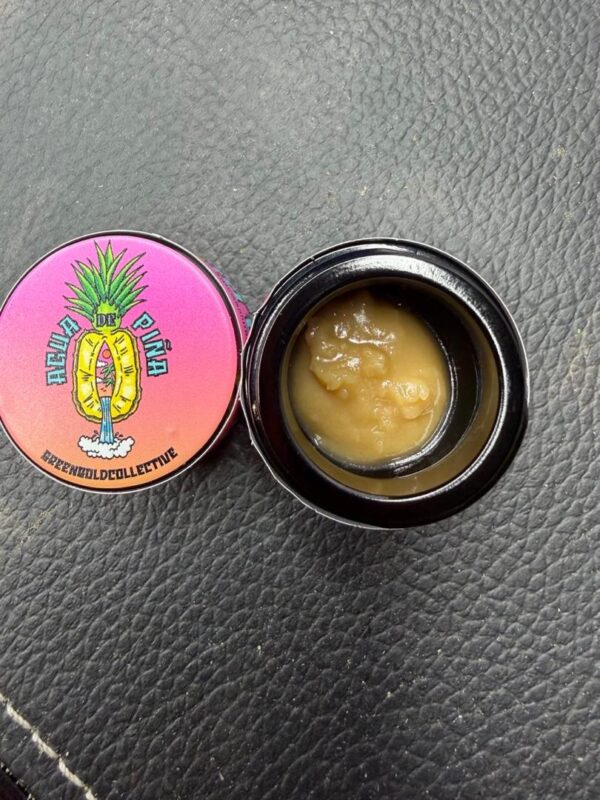
Live rosin cold cure produces a noticeably different texture than a same-week live press. This batch sits in a stable badder consistency, dense enough to scoop and handle with a dab tool without collapsing, yet still pliable enough to work with once it warms slightly. That stability is the direct payoff of the extended cure. A fresh, uncured press tends to run wetter and looser because moisture and terpene content are still unevenly distributed through the hash at the time of pressing. Cold curing evens all of that out first, so what comes off the plates is uniform jar to jar rather than varying with however wet or dry that particular scoop of hash happened to be.
Cannabinoids, Oxidation, and Why Storage Still Matters After the Cure
Cold curing stabilizes cannabinoids before the press, but the work of protecting them doesn’t stop once the jar is sealed. Oxidation is the same basic process that browns a cut apple, and it happens to rosin whenever heat, light, and open air get too much access over time. A cold cured batch like this one is more resistant to oxidation than a rushed press simply because the moisture and terpene content were already stabilized before packaging, but it isn’t immune. Cold, dark, airtight storage after purchase is still what keeps this jar tasting like fresh pineapple six months from now instead of tasting like nothing at all. We’ll walk through exact storage specifics further down this page.
How to Use Cold Cure Live Rosin
How to use cold cure live rosin comes down to temperature control more than anything else. This batch is built for low-temperature dabbing, somewhere in the 480 to 520°F range on a quartz or ceramic banger, which is hot enough to fully vaporize the concentrate without torching off the lighter, more volatile terpenes that carry the pineapple and cream notes. A cold start method, where the banger is heated and then allowed to cool before the dab is dropped in, works especially well with a badder texture like this one since it draws the flavor out slowly instead of flash-vaporizing everything at once.
Portioning also matters when learning how to use cold cure live rosin efficiently. Because the texture holds its structure well, this batch is easy to portion into consistent dab-sized amounts with a metal or ceramic tool without the mess that comes from a wetter, sauce-style concentrate. Warming the tool slightly before scooping makes portioning even cleaner, since the badder will release from a warm tool more easily than a cold one.
Consistency From the First Gram to the Last
Consistency is easy to promise and harder to actually deliver across an entire batch, especially with a process that takes weeks rather than days. Live rosin cold cure consistency comes down to controlling the same handful of variables at every stage: freeze timing at harvest, wash temperature during the ice water separation, the exact micron progression used, humidity and temperature during the full cold cure, and press temperature and duration at the end. Any single variable drifting even slightly can change the final texture, color, or flavor of the batch. Because this entire run comes from one wash and one cure cycle rather than several smaller batches blended together, a single gram sample purchased today should taste and handle identically to a jar pulled from the same batch weeks from now.
That kind of consistency is also why single-batch fulfillment matters more than it might seem. A seller blending leftover hash from multiple cure cycles to fill orders faster can still call the result live rosin cold cure, but the jar-to-jar consistency buyers actually care about tends to disappear the moment blending starts.
Who This Live Rosin Cold Cure Batch Is Best For
Live rosin cold cure like this batch tends to appeal most to buyers who already know the difference between a rushed press and a properly finished one, and who are willing to pay for the extra weeks of cure time that go into getting there. If a firm, stable texture that holds up over months of storage matters more to you than the slightly brighter top notes of a same-day live press, this is the format built for that priority. It’s also a strong fit for anyone comparing multiple listings side by side and wanting a batch where the lab data, cure time, and press specs are all disclosed up front rather than something you have to ask a budtender or customer service rep to confirm.
Terpenes and What They Tell You
A live rosin cold cure batch is judged as much by its terpene sheet as its cannabinoid numbers, since terpene retention is the whole point of pressing without solvents. Limonene leads this batch, which is where the bright pineapple and citrus top note comes from. Myrcene sits underneath it, adding body and a faint earthiness that keeps the profile from tasting like straight candy. Caryophyllene rounds it out with a light peppery warmth. Reading a terpene sheet is honestly a better way to judge a live rosin cold cure purchase than relying on the strain name alone, since two jars of the same strain can taste noticeably different depending on how the wash, cure, and press were handled.
Live Rosin Cold Cure for Sale: What to Expect When You Order
Live rosin cold cure for sale through this page ships from a single tested batch, not a blend of multiple press runs stitched together to fill orders. Every size, from a single gram sample to a full ounce, comes from batch AGP-0912-CC with the matching certificate of analysis included. Orders are packed in airtight, UV-blocking containers and shipped with temperature awareness in mind so the badder texture holds up in transit rather than arriving softened or warped. If you’re searching for live rosin cold cure for sale and comparing listings, the fastest way to judge quality before buying is checking whether the seller posts a batch-specific COA rather than a generic reference sheet, and whether the listed cure time is specific rather than vague.
The Agua de Pina Strain: Character and Classification
Agua de Pina is classified as a sativa-leaning hybrid, roughly 65% sativa to 35% indica, and the genetics behind it are widely understood to bring together pineapple-forward fruit lines with a creamier, dessert-leaning backbone. The name itself borrows from the Spanish phrase for pineapple water, a nod to the tropical, almost juice-like sweetness this strain expresses when it’s washed and pressed with care. It’s not a widely documented legacy strain, more of a newer cross that’s built a reputation batch by batch among people chasing a true tropical flavor profile in a live rosin cold cure format rather than a distillate-diluted version of the same thing.
What Arrives at Your Door
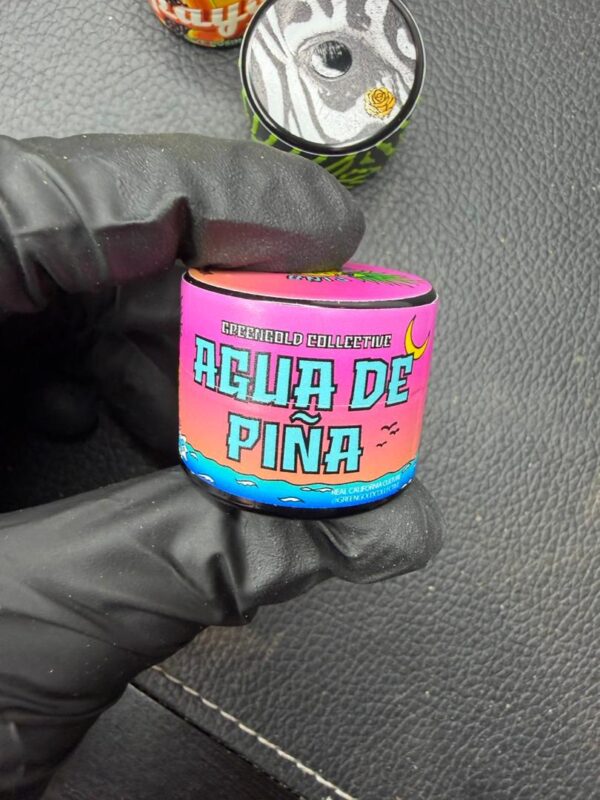
Live rosin cold cure orders leave the facility packed the same way regardless of size, whether it’s a single gram sample or a full ounce. Every jar is glass, not plastic, since plastic containers can interact with terpenes over time and subtly alter flavor. Lids are sealed airtight to keep oxygen exposure to a minimum from the moment the jar is filled. Outer packaging blocks UV light entirely, since even a few hours of direct sun exposure during shipping can begin degrading the lighter terpenes that make this batch worth buying in the first place. During warmer months, orders ship with cold packs to keep the badder texture stable in transit rather than arriving soft or misshapen.
A printed copy of the batch’s certificate of analysis rides along inside the package as well, so the lab data isn’t something you have to dig up separately after your order arrives. For a product where texture and freshness are directly tied to how carefully it was handled after pressing, packaging isn’t an afterthought, it’s the last step in the same quality process that started back at the harvest freeze.
Why This Batch Stands Out
Live rosin cold cure from this particular press stands out for a combination of things that are easy to claim and harder to actually deliver: a fine 25 micron finishing wash, a genuine 5 to 7 week cure rather than a shortened version of one, a controlled low-temperature press, and full lab transparency down to the batch number. None of those things alone are unique to this jar, but the combination, done consistently and verified by a third-party lab every time, is what a serious buyer should be looking for before spending money on any solventless concentrate.
 Product Specifications
| Specification | Detail |
|---|---|
| Strain | Agua de Pina |
| Classification | Hybrid, sativa-leaning (roughly 65/35) |
| Extraction Method | Solventless, ice water hash, cold cured, pressed with heat and pressure |
| Input Material | Fresh frozen whole plant |
| Micron Progression | 160µ → 90µ → 25µ finishing bag |
| Cold Cure Time | 5–7 weeks at 34–38°F |
| Press Temperature | 158°F |
| Press Time | 30–45 seconds |
| Texture | Stable badder, scoopable, holds shape at room temp |
| Color | Golden amber |
| Total Cannabinoids | 80.9% |
| Total THC | 76.5% |
| Total Terpenes | 6.0% |
| Moisture Content | 3.9% |
| Residual Solvents | None detected |
| Available Sizes | 1g, 3.5g, 7g, 14g, 28g |
| Batch Testing | Third-party lab, COA included per batch |
Lab Data: Certificate of Analysis Summary
🧪 Every live rosin cold cure order ships with the exact COA for the batch in your jar, dated to the actual cure and press, not a generic reference pulled from an older run.
Terpene Profile
🍍 Live rosin cold cure from this batch runs limonene-forward, which is exactly what gives Agua de Pina its bright pineapple and citrus character before the deeper myrcene body shows up underneath.
Flavor
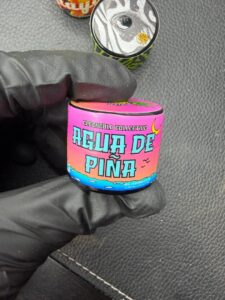 🍍 Live rosin cold cure from this Agua de Pina batch opens with bright, juicy pineapple, almost exactly like the fruit itself rather than an artificial candy version of it. A soft creamy sweetness shows up underneath as the dab settles, rounding out the tropical top note into something closer to a pineapple cream than straight fruit. There’s a light peppery edge on the finish from the caryophyllene, which keeps the whole profile from tasting flat or one-dimensional.
Aroma
Cracking the jar releases tropical pineapple first, sharp and juicy, with a faint sweetness underneath that grows more noticeable as the rosin warms to room temperature. It’s a loud, true-to-plant smell with no chemical or sour edge at all, which is one of the clearest signs of a properly cold cured, properly stored solventless product. The cream and pepper notes stay in the background of the aroma, mostly showing up once you actually taste it.
Inhale & Exhale Experience
The inhale is smooth, with the pineapple character hitting almost immediately and very little harshness even on a full-size dab. That smoothness is a direct payoff of the low, controlled press temperature protecting the lighter terpenes. The exhale brings the creamier, slightly peppery backend of the flavor forward, and it lingers pleasantly rather than fading fast. Dabbed low, around 480 to 520°F, this batch stays clean and flavorful through the entire hit rather than turning harsh toward the end the way an overheated dab often does.
Details for Cold Cured Hash Rosin
- Pressed from fresh frozen whole plant, never dried trim or bud
- Ice water hash washed through a 160µ to 25µ micron progression
- Cold cured 5 to 7 weeks at 34–38°F before pressing
- Pressed at 158°F for 30–45 seconds, low pressure ramp
- Single-batch fulfillment, no blending across press runs
- Every jar traceable to batch AGP-0912-CC and its COA
Features
- 80.9% total cannabinoids, 6.0% total terpenes
- Zero residual solvents, fully solventless extraction process
- Stable badder texture that holds its shape at room temperature
- Bright, true-to-plant pineapple flavor from Agua de Pina genetics
- Batch-matched COA included with every order
- Available from single gram samples up to a full ounce
Rosin Quality Details
Live rosin cold cure quality is judged on melt, color, grit, and how well the texture holds over time. This batch pulls a full melt with no bubbling residue left behind, confirming a clean wash and a properly dialed press. Color runs a consistent golden amber, lighter and more uniform than what you typically see from a rushed press, which is one of the visible payoffs of the extended cold cure. There’s no visible plant matter or screen material under a loupe, a result of the fine 25 micron finishing bag and a controlled pressure ramp. Because this batch was fully cured before pressing, it’s also more resistant to weeping or separating in the jar over the following months than a same-week live press would be.
Product Highlights
- 🍍 Bright, true-to-plant pineapple and cream flavor from Agua de Pina
- ❄️ Cold cured 5 to 7 weeks for a stable, long-lasting texture
- 🔥 Low-temperature press to protect the terpene profile
- 🧪 Full COA included, zero residual solvents
- 🧊 Fresh frozen input for maximum terpene retention
- ✅ Single-batch fulfillment, fully traceable to lab results
Why Customers Choose Live Rosin For Sale
Live rosin cold cure buyers choose Live Rosin For Sale because the process is transparent from the wash to the jar. Every batch, this Agua de Pina press included, is solventless from start to finish, cured for a real, disclosed length of time rather than a vague “cured” claim, and backed by a lab sheet tied to a specific batch number instead of a generic reference document. For a buyer trying to decide between a handful of similar-looking listings, that level of detail, published up front rather than provided only if asked, is usually the deciding factor.
Storage Instructions
❄️ Store live rosin cold cure in an airtight, UV-blocking container in a cool, dark place. Refrigeration between 36 and 46°F works well for anything you’ll use within a month or two, and this batch’s stable badder texture holds up especially well to refrigerated storage thanks to the extended cure it already went through. For longer-term storage, freezing in an airtight jar preserves texture and terpenes best, just let the jar reach room temperature before opening to avoid condensation. Keep it away from direct light and heat at all times, since both accelerate oxidation and will dull the pineapple top notes faster than almost anything else.
Usage Tips
- Dab low, around 480–520°F, to protect the limonene-forward terpene profile
- Try a cold start method to draw out the pineapple and cream notes slowly
- Use a warm dab tool to make portioning this stable badder texture easier
- Let a refrigerated jar sit at room temperature for a few minutes before handling
- Store in a dedicated cold, dark spot rather than cycling in and out of temperature changes
Comparison vs Similar Flavors
10 FAQs
What does live rosin cold cure actually mean?
It means the ice water hash was rested in cold, dark storage for an extended period, in this case 5 to 7 weeks, before being pressed with heat and pressure into rosin, rather than pressed right after the wash.
What strain is this live rosin cold cure batch pressed from?
This batch is pressed from Agua de Pina, a sativa-leaning hybrid at roughly 65% sativa and 35% indica, known for its bright pineapple and cream flavor profile.
How is live hash rosin cold cure different from a same-day live press?
Live hash rosin cold cure rests for weeks before pressing, which stabilizes moisture and cannabinoids and produces a firmer, more shelf-stable badder texture compared to the wetter, less predictable texture of a same-day press.
How do I use cold cure live rosin for the best flavor?
Dab low, around 480 to 520°F, ideally with a cold start method. That temperature range fully vaporizes the concentrate without burning off the lighter terpenes that carry most of the flavor.
Where can I find live rosin cold cure for sale with real lab data?
Look for a listing with a batch-specific certificate of analysis rather than a generic reference sheet, and a disclosed cure time rather than a vague claim. This page includes both for batch AGP-0912-CC.
Is this product actually solventless?
Yes. The COA shows residual solvents as none detected, since the entire process uses only ice water, mesh screens, cold storage, heat, and mechanical pressure.
What’s the total cannabinoid and terpene content of this batch?
This batch tests at 80.9% total cannabinoids, 76.5% total THC, and 6.0% total terpenes, with the full breakdown in the Lab Data section above.
What texture should I expect from this batch?
Expect a stable, scoopable badder that holds its shape at room temperature, firmer than a same-week live press due to the extended cold cure.
How should I store live rosin cold cure after I buy it?
Keep it airtight, refrigerated between 36 and 46°F for shorter-term storage, or frozen in an airtight container for longer-term storage, and always out of direct light.
Is this batch tested for more than potency?
Yes. Every batch is screened for pesticides, microbials, and heavy metals in addition to cannabinoid and terpene potency, and all three come back pass on this batch’s COA.
Customer Reviews
Best pineapple flavor I’ve had in a rosin, full stop. Texture is stable enough that I’ve had the same jar for almost two months now and it still scoops clean, no weeping or breakdown at all. That cold cure clearly does something real. 🍍
Ordered based on the batch-specific COA being posted right on the page, which is rare enough that it made the decision easy. Flavor matched the description exactly, bright pineapple up front with a creamy finish. Reordering already.
Tried the cold start method suggested in the usage tips and it made a noticeable difference in flavor compared to how I was dabbing before. This is my new go-to for anything labeled live rosin cold cure. 🔥
Really solid batch, texture held up great in the mail even during a warm week. Only reason for four stars is I wish the ounce size restocked faster, but the quality itself has been consistent across two separate orders.
David bartosh –
I appreciate a business that focuses on professionalism and customer satisfaction. My experience with Fresh Press Rosin for Sale was positive, and I would recommend trying out this flavor
Anton Krokop –
I value clear communication when shopping online, and that is something I look for in a business. Fresh Press Rosin for Sale made the experience feel organized and professional.
Christopher gore –
This flavor is wonderful 🏆
I am definitely coming back for more