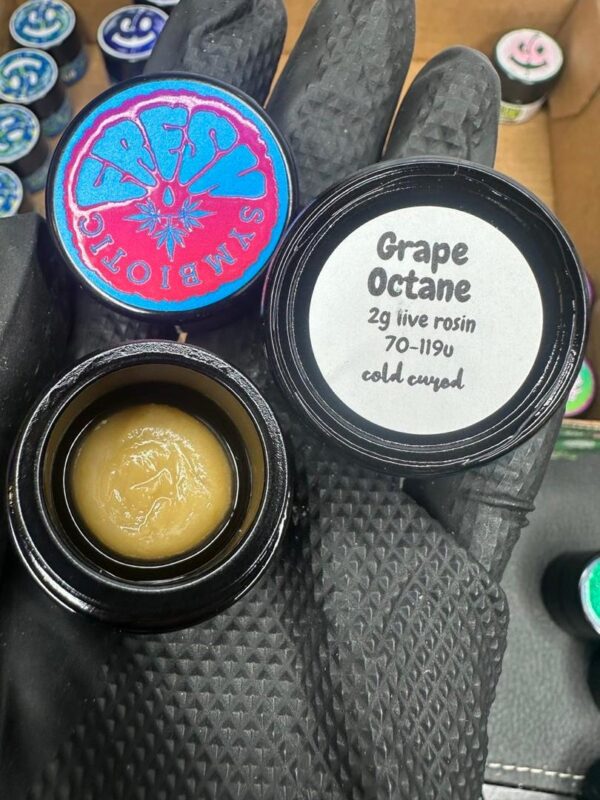
Grape Octane Cold Cured Rosin for Sale | Fresh Squeeze Premium Live Rosin
Cold cured rosin starts with a simple idea: don’t rush the part that actually builds flavor. A lot of solventless rosin gets pressed, jarred, and shipped within days. This batch doesn’t work that way. Fresh Squeeze presses Grape Octane straight off fresh frozen material, then holds the rosin at a stable, cold temperature for an extended rest period before it ever gets packaged. That resting stage, the actual “cure” in cold cured rosin, is where moisture settles out, texture firms up into something more workable, and the terpene profile has time to fully integrate instead of tasting sharp or one-dimensional straight off the plates.
Grape Octane itself is a well-documented cross of Grape Pie and High Octane OG, landing as an indica-dominant hybrid at roughly 70% indica and 30% sativa. The name tells you almost everything before you even open the jar. “Grape” points to the sweet, purple, berry-forward side of the genetics, while “Octane” nods to the gassy, fuel-heavy OG Kush lineage running through High Octane OG. Put those two together and you get a strain that’s become a favorite for extraction specifically because it holds onto that grape-and-fuel combination even after a full wash and press cycle.
Cold cured rosin production on this strain starts at harvest. The plant material is fresh frozen within hours of being cut, locking in terpenes at their peak rather than letting them degrade through a standard dry-and-cure cycle. From there, it’s washed through a series of ice water baths and micron bags to isolate clean trichome heads, discarding plant matter and lower-quality material along the way. Only the finest, cleanest hash makes it to the press. Anything coarser or contaminated with plant fiber gets set aside, since even a small amount of plant matter in the final press can dull flavor and darken color.
Once the hash is ready, Fresh Squeeze presses it on a low-temperature flat-plate setup designed to protect the more fragile terpenes in the Grape Octane profile, things like linalool and myrcene that break down fast under high heat. A slower press at a lower temperature usually means slightly less total yield compared to a hot, fast pull, but it protects far more of the actual flavor and cannabinoid content that makes cold cured rosin worth buying in the first place. This isn’t a brand chasing volume. It’s one built around getting the most out of a genuinely great cultivar.
The cure itself is where this product earns its name. After pressing, the rosin goes into temperature-controlled storage for an extended rest period, generally measured in weeks rather than days. During that time, residual moisture and plant lipids continue to settle out of the concentrate, and the texture shifts from a fresh, slightly wetter consistency into the badder or jam texture customers expect from a properly cured batch. Skipping this step is one of the most common shortcuts in the solventless space, and it’s usually the reason a rosin tastes harsh or “green” even when the starting material was solid. Fresh Squeeze treats the cure as a required production stage, not an optional add-on.
Grape Octane rosin for sale from this batch comes in two size options to fit different kinds of buyers. The 1g size works well for personal use or for anyone wanting to try the strain before committing to a larger amount. The 2g cold cured rosin jar is built for regular users and anyone who wants a better per-gram value without stepping all the way up to wholesale quantities. Both sizes come from the exact same batch and cure cycle, so there’s no quality difference between them, just a difference in how much you’re buying at once.
For customers specifically searching for cold cure rosin Florida availability, Fresh Squeeze ships to legal markets where solventless concentrates can be sold and distributed under current state regulations. Availability and exact product listings can shift based on state licensing and seasonal supply, so checking current stock before ordering is always the safest move, especially for a small-batch product like this one where quantities are limited by design rather than mass-produced to meet every region’s demand at once.
Cold cure solventless live rosin, as a category, sits at the top of most concentrate hierarchies for a reason. Every step in the process, fresh freezing, ice water washing, low-temp pressing, and an extended cure, exists to protect what was already in the plant rather than add anything new to it. There’s no solvent extraction involved at any stage, no chemical purge step, and no shortcuts taken to speed up a timeline that naturally takes weeks to do right. That’s a meaningfully different product than concentrates pressed and shipped within days of harvest, and it’s worth understanding that difference before comparing prices across brands.
Texture on this particular batch lands in the badder-to-jam range, which is fairly typical for a well-cured Grape Octane press. Expect a slightly whipped, workable consistency that’s easy to handle with a dab tool without being sticky or runny. Some natural batch variation is normal here too. Weather at harvest, moisture content going into the wash, and even ambient humidity during the cure period can all nudge final texture slightly from one batch to the next. That variation is a sign of a live, minimally processed product rather than something standardized with fillers or consistency agents.
Every jar that leaves Fresh Squeeze ships with its own third-party COA, and the lab figures below reflect typical, representative results for this cultivar and process rather than a single specific batch number pulled out of thin air. Actual cannabinoid and terpene percentages will vary slightly jar to jar, which is normal for any live, tested concentrate, and the physical COA included with your order will confirm exact figures for the batch you receive.
Cold cured rosin buyers tend to fall into two camps: people who’ve already tried a properly cured rosin and can’t go back to rushed product, and people who are curious but haven’t experienced the difference yet. If you’re in the second group, this batch is a solid place to start. Grape Octane brings enough natural sweetness and gas to make the strain approachable, while the extended cure process shows off exactly what a patient, well-run solventless operation can pull out of good starting material.
At the end of the day, cold cured rosin is a promise about process as much as it is a product description. It means fresh frozen sourcing, a careful low-temperature press, and real time spent curing before anything gets packaged and shipped. That’s what you’re getting in every jar of this Grape Octane batch, and it’s the same standard Fresh Squeeze holds across every strain that goes through their press. 🍇
Cold cured rosin also depends heavily on what happens before the plant ever reaches a press. Fresh Squeeze sources Grape Octane from cultivators who harvest specifically for extraction rather than for flower sales, which changes how the plant is grown and handled from the start. Extraction-focused cultivation often means slightly different feeding schedules, harvest timing based on trichome development rather than bag appeal, and immediate freezing on-site to lock in resin quality before any degradation can happen. That upstream relationship between grower and presser is easy to overlook, but it’s often the single biggest factor separating an average rosin from an exceptional one, regardless of how good the press equipment is.
The wash process itself deserves a closer look too, since it’s where a lot of quality gets decided before pressing even starts. Fresh frozen Grape Octane goes into ice water along with the plant material, agitated gently to knock trichome heads loose without shredding plant fiber into the mix. That slurry then passes through a descending series of micron screens, from coarser bags down to the finest, cleanest cuts. Each pass isolates a slightly different grade of hash, and only the top few passes, generally anything in the 90 to 45 micron range, make it into a cold cured rosin batch like this one. Coarser material still contains usable resin, but it also carries more plant lipids and waxes that show up as darker color and harsher flavor once pressed, so it typically gets set aside for lower-tier products instead.
Pressing conditions matter just as much on the back end. Grape Octane responds well to a patient, low-temperature pull, generally staying under 200°F throughout the press cycle. Pushing heat higher would pull slightly more oil out of the bag per pull, but it comes at the cost of degrading exactly the terpenes that make this strain worth pressing in the first place, particularly the lighter, more volatile ones that give Grape Octane its brighter grape and berry notes. A slower press protects those compounds, even if it means running more pulls per pound of hash to hit the same total yield a hotter press might reach in fewer cycles.
Once pressed, the actual cure period is where Fresh Squeeze spends the most deliberate time. Rosin fresh off the plates typically sits somewhere between a loose sauce and a soft badder, with visible moisture still present in the mix. Rather than packaging at that stage, batches go into temperature-controlled cure containers, held at a stable cold temperature for an extended stretch of time. During that window, residual moisture slowly evaporates out, terpenes that were sitting somewhat separated from the cannabinoid matrix have time to fully integrate, and the overall texture firms into the badder-to-jam consistency this batch is known for. Skipping or shortening this stage is one of the fastest ways to end up with rosin that tastes flat or slightly harsh, even when everything upstream was done correctly.
For anyone comparing cold cure solventless live rosin against fresh press rosin that skips the extended cure, the difference usually shows up most clearly in aftertaste. Rosin pressed and shipped quickly often tastes fine on the initial inhale but leaves a slightly plant-y or grassy note on the exhale, a sign that moisture and uncured plant compounds are still present. A fully cured batch tends to finish cleaner, with the terpene profile carrying through from first hit to last without that same trailing harshness. That’s not a knock on fresh press rosin as a category, since plenty of excellent product skips a long cure and still tastes great. It’s simply a different approach, and cold cured rosin represents the slower, more patient end of that spectrum.
Packaging and shipping get treated with the same level of care once the cure is finished. Jars are filled and sealed in a way that limits air exposure, since oxygen is one of the fastest ways a finished rosin loses terpene content even after a proper cure. For customers researching cold cure rosin Florida shipping specifically, orders headed to warmer climates get extra attention around insulated packaging and cold-chain handling during transit, since heat exposure during shipping can undo some of the benefit of a careful cure before the jar even reaches your door. It’s a small detail, but it matters for a product that depends this much on temperature control from start to finish.
Fresh Squeeze also keeps close track of batch-to-batch consistency without pretending every jar will be identical. Because this is a live, minimally processed product made from a single-source strain, small shifts in color, texture, or terpene percentage between batches are normal and expected. What stays consistent is the process itself: fresh frozen sourcing, ice water washing down to the cleanest micron grades, a low-temperature press, and a full cure cycle before packaging. That process, applied consistently, is what “cold cured rosin” is supposed to mean as a category, and it’s the standard this Grape Octane batch was built to meet. 🍇
It’s worth talking a bit about how Grape Octane behaves specifically as an extraction cultivar, since not every strain presses or cures the same way. Some genetics carry heavier, waxier lipid content that makes for a stickier, harder-to-cure hash, while others run leaner and firm up quickly with minimal cure time. Grape Octane sits somewhere in the middle. It has enough natural resin density to produce a solid yield without excessive plant lipid content, which makes it a reasonably forgiving strain to cure properly. That said, the indica-dominant genetics inherited from Grape Pie do contribute a slightly heavier terpene profile compared to sativa-leaning cultivars, which is part of why the extended cure period matters so much here specifically. Rushing the cure on a strain like this tends to leave more of that heavier profile tasting muddy rather than crisp.
Cold cured rosin also benefits from thoughtful dab hardware on the consumer end, and it’s worth mentioning since a lot of the work put into pressing and curing this rosin can get undone with the wrong setup at home. A quartz or ceramic banger held at a controlled, lower temperature preserves far more of the terpene profile than a torch-heavy, high-temp dab. Enail setups or bangers with temperature-reading inserts give the most consistent results, since guessing at heat by color or timing alone tends to run hotter than intended. For a rosin built around this much cure time and terpene preservation, matching that same patience on the consumption side just makes sense.
Grape Octane rosin for sale through Fresh Squeeze also comes with straightforward sourcing transparency. Customers can expect clear labeling on harvest batch, cure completion date, and net weight on every jar, along with the accompanying COA once lab results are finalized for that specific run. That level of detail matters more for cold cured rosin than for most concentrate categories, since the whole value proposition rests on trusting that the extra time and cost that goes into curing actually happened rather than being a marketing term slapped onto a rushed batch.
Finally, it’s worth setting expectations around price relative to faster, less labor-intensive concentrates. Cold cured rosin costs more to produce than fresh press rosin sold within days of pressing, largely because of the storage time, temperature control, and labor involved in monitoring a multi-week cure cycle properly. That cost typically shows up in the final price point compared to quicker-turnaround solventless products. For customers who’ve compared a properly cured batch against a rushed one side by side, that price difference usually makes sense the moment the jar gets opened. Flavor depth, smoothness on the exhale, and overall texture consistency tend to separate the two categories clearly enough that repeat buyers rarely go back once they’ve tried a genuinely cured product like this Grape Octane batch. 🍇
5.  Product Specifications Table
| Spec | Detail |
|---|---|
| Product Type | Cold cured solventless live rosin |
| Strain | Grape Octane (Grape Pie x High Octane OG) |
| Classification | Indica-dominant hybrid (70% indica / 30% sativa) |
| Extraction Method | Fresh frozen ice water wash, low-temp flat-plate press |
| Cure Process | Extended temperature-controlled cure (weeks, not days) |
| Consistency | Badder to jam, batch dependent |
| Color | Light gold to deep amber |
| Solvent Use | None (100% solventless) |
| Sizes Available | 1g, 2g cold cured rosin |
| THCA (representative range) | 68%–76%, confirm exact figure on batch COA |
| Total Terpenes (representative range) | 4.5%–7.5%, confirm exact figure on batch COA |
| Lab Status | Third-party COA included with every jar |
| Availability | Ships to legal markets, including cold cure rosin Florida availability |
| Storage | Cool, dark, airtight, refrigerated recommended |
| Shelf Life (properly stored) | Best quality within 4–6 months |
6. Flavor
Cold cured rosin from this Grape Octane batch delivers exactly what the name promises: sweet grape and berry up front, followed by a gassy, fuel-forward finish carried over from the High Octane OG side of the genetics. A light peppery spice rounds out the back end, keeping the sweetness from ever tasting one-note or artificial.
7. Aroma
Open the jar and the grape hits first, thick and almost jammy, backed by a sharp diesel edge underneath. Cold cured rosin done properly should smell close to fresh flower, and this batch delivers that loud, true-to-strain aroma the moment the lid comes off.
8. Inhale & Exhale Experience
Cold cured rosin built around a full cure cycle tends to hit smoother than rushed product, and this batch is a clear example. The inhale is soft with immediate grape and berry flavor, while the exhale carries a lingering gas and spice note that sticks around for several minutes without turning harsh.
9. Details for Cold Cured Hash Rosin
Cold cured hash rosin depends on time as much as technique. This batch starts as fresh frozen Grape Octane, gets washed down to clean micron grades, presses at a controlled low temperature, then rests through a full cure cycle before packaging. Every step is designed to protect flavor over speed, which is the entire point of choosing cold cured rosin over faster-turnaround concentrates.
10. Features
- 🍇 100% solventless, fresh frozen extraction
- Extended cold cure before packaging, not a rushed press-and-ship process
- Grape Octane genetics (Grape Pie x High Octane OG)
- Available in 1g and 2g cold cured rosin sizes
- Third-party COA included with every jar
- No additives, cutting agents, or fillers
- Ships to legal markets, including cold cure rosin Florida delivery
11. Rosin Quality Details
Quality control starts at the wash stage, where only the cleanest micron grades move forward to pressing. From there, a low-temperature press protects Grape Octane’s more delicate terpenes, and a full cure cycle rounds out texture and flavor before packaging. Every jar ships with its own third-party COA reflecting that specific batch’s tested results.
12. Terpene Profile
- Myrcene (earthy, sedating, classic OG backbone)
- Caryophyllene (peppery, spicy)
- Limonene (citrus, mood-lifting)
- Linalool (floral, adds to the grape sweetness)
- Humulene (woody, subtle herbal note)
Figures above reflect terpenes typically expressed by Grape Octane genetics. Exact batch percentages are confirmed on the COA included with your order.
13. Product Highlights
- Full cold cure cycle before packaging, not a rushed press
- Verified Grape Octane genetics (Grape Pie x High Octane OG)
- 1g and 2g cold cured rosin sizes available
- Third-party COA included with every jar
- Ships to legal markets including cold cure rosin Florida
14. Why Customers Choose Fresh Squeeze
Customers choose Fresh Squeeze because the cure isn’t a marketing term here, it’s an actual production stage that takes real time and real temperature control to do right. Buyers who’ve tried both rushed and properly cured rosin tend to notice the difference in smoothness and aftertaste almost immediately, and that’s exactly the gap this Grape Octane batch is built to close.
15. Additional Topics
2g Cold Cured Rosin
The 2g cold cured rosin size gives regular users a better per-gram value without stepping up to full wholesale quantities. It comes from the same batch and cure cycle as the 1g jars, so quality and freshness are identical between sizes, just a difference in total quantity per container.
Cold Cure Rosin Florida
Fresh Squeeze ships cold cured rosin to legal markets where solventless concentrates can be sold under current state licensing, Florida included. Orders headed to warmer states get extra attention around insulated, cold-chain packaging during transit, since heat exposure in shipping can undo some of the benefit of a careful cure before the jar ever arrives.
Cold Cure Solventless Live Rosin
As a category, cold cure solventless live rosin represents the slower, more patient end of the solventless spectrum. Fresh frozen sourcing, ice water washing, a low-temperature press, and a full multi-week cure all work together to protect flavor and cannabinoid content that faster extraction methods often sacrifice for speed.
Grape Octane Rosin for Sale
This Grape Octane rosin for sale batch reflects a strain built for extraction from the ground up. Grape Pie contributes the sweet, berry-forward side, while High Octane OG brings the gassy, fuel-heavy backbone that holds up well through a full wash, press, and cure cycle.
16. Storage Instructions
Store this rosin in an airtight, non-stick container in a cool, dark place. Refrigeration is recommended for longer-term storage to protect texture and terpene content, though daily-use jars can be kept at stable room temperature away from light and heat if consumed within a few weeks.
17. Usage Tips
Low-temp dabbing preserves the most flavor from a fully cured rosin like this one. A controlled banger temperature, roughly 450°F to 550°F, keeps the grape and gas notes intact instead of burning them off. An enail or temperature-reading insert helps take the guesswork out of hitting that range consistently.
18. Comparison vs Similar Flavors
Compared to other grape-leaning concentrates on the market, Grape Octane leans heavier on the fuel and spice side rather than pure sweetness alone. Strains like straight Grape Pie tend to taste sweeter and less gassy, while Grape Octane’s High Octane OG lineage adds a diesel edge that gives this batch more depth on the exhale.
19. FAQs
1. What is cold cured rosin? Cold cured rosin is solventless rosin that rests through an extended, temperature-controlled cure period after pressing, allowing moisture to settle out and flavor to fully develop before packaging.
2. What strain is this rosin made from? This batch is pressed from Grape Octane, an indica-dominant hybrid cross of Grape Pie and High Octane OG.
3. Is 2g cold cured rosin available? Yes, this batch is available in both 1g and 2g cold cured rosin sizes from the same press and cure run.
4. Do you ship cold cure rosin to Florida? Yes, Fresh Squeeze ships to legal markets including Florida, with insulated cold-chain packaging for warmer climates.
5. What makes cold cure solventless live rosin different from regular rosin? The extended cure period is the main difference, giving the concentrate more time to settle moisture and round out flavor compared to product pressed and shipped quickly.
6. What does Grape Octane taste like? Expect sweet grape and berry up front with a gassy, diesel-forward finish and a light peppery spice.
7. Is this rosin lab tested? Yes, every jar ships with its own third-party COA reflecting that specific batch’s results.
8. How should I store cold cured rosin? Keep it airtight, cool or refrigerated, and out of direct light to protect texture and terpene content over time.
9. What consistency does this rosin have? This batch typically lands in the badder-to-jam range, a common texture for a properly cured Grape Octane press.
10. Why does cold curing matter for flavor? It gives residual moisture and plant lipids time to settle out, resulting in a smoother exhale and cleaner overall flavor compared to rosin pressed and shipped quickly.
Reviews
There are no reviews yet.