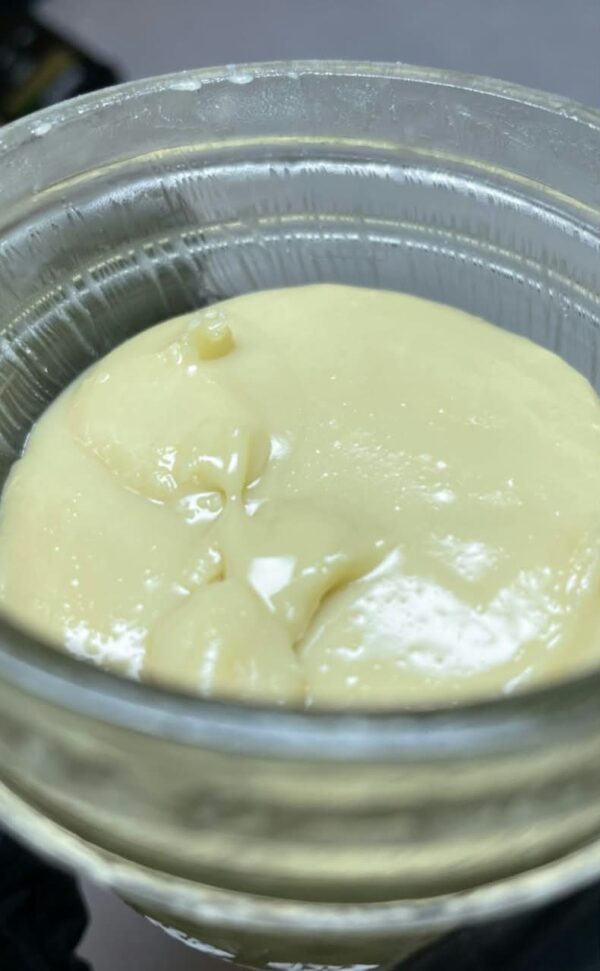
Rosin Badder for Sale | Fresh Press Rosin | Premium Solventless Live Rosin Badder
Rosin Badder for Sale — What You’re Actually Getting When You Buy the Good Stuff 🏆
Rosin badder for sale has become one of the most searched terms in the solventless cannabis concentrate market, and the reason is simple: badder is the consistency format that finally makes premium rosin accessible to the widest range of consumers. It’s easy to scoop. It’s easy to portion. It loads onto any dab tool without the clinical precision required for shatter or the patience required for sauce. And when it’s made correctly, it delivers the same full-spectrum, terpene-rich experience as any other top-tier solventless extract.
Fresh Press Rosin makes it correctly.
The Mimosa Rosin Badder starts with fresh-frozen cannabis harvested at peak terpene maturity and never exposed to the heat or air that would begin degrading those terpenes before extraction even begins. From that starting point, the production process is entirely mechanical, entirely solvent-free, and calibrated at every stage to preserve as much of the plant’s original chemical character as possible. What arrives in the glass jar on your shelf is the plant’s own expression, concentrated and stabilized into a creamy, workable, deeply aromatic badder that performs beautifully on a banger, an e-rig, or a rosin-compatible vaporizer. 🌱
What Makes Fresh Press Rosin Different — The Brand Story
The premium concentrate market has no shortage of brands claiming solventless purity. What separates Fresh Press Rosin from that field isn’t the label or the packaging. It’s the sourcing standard and the processing discipline behind every jar.
Fresh Press Rosin sources single-source cannabis from licensed California farms selected for cultivar quality, resin production, and terpene density. The fresh-freeze protocol is non-negotiable. Every batch enters the extraction process within hours of harvest, frozen before any significant terpene degradation can occur. The ice water extraction uses food-grade processing throughout. The hydraulic press operates at temperatures verified to stay below the terpene degradation threshold. And the cold-cure protocol that converts fresh rosin into badder is managed over days, not rushed.
That level of process discipline produces a product with a terpene profile dense enough to smell through the jar, a color that ranges from pale amber to cream gold depending on the batch, and a consistency that’s as satisfying to work with as it is to consume. This is what rosin badder for sale is supposed to look, smell, and taste like. Fresh Press Rosin built its reputation on delivering exactly that, every batch. 🔬
How Is Live Rosin Badder Made — The Full Production Process
How is live rosin badder made is the question that separates informed buyers from anyone who’s just looking at a jar of concentrate for the first time. Understanding the process is what helps you recognize quality when you find it, and identify shortcuts when a product isn’t quite what it claims to be.
Stage 1 — Fresh-Freeze Harvest Cannabis destined for live rosin production is harvested at the precise window when trichome development and terpene concentration peak, then immediately frozen rather than dried or cured. This single decision is what makes the resulting product “live” in the true sense. The live terpene profile is locked in before any post-harvest degradation begins.
Stage 2 — Ice Water Extraction The frozen plant material is processed in ice water through controlled agitation that mechanically separates trichome heads from plant matter. The loose trichomes are then collected through a series of micron-rated filter bags, with the 73–120 micron fraction typically producing the highest purity, lowest-contamination material classified as full-melt grade bubble hash.
Stage 3 — Freeze Drying The wet bubble hash is dried in a freeze dryer rather than air-dried. Freeze drying removes water through sublimation (ice directly to vapor) under controlled vacuum pressure, which means the trichome architecture and volatile terpene compounds are preserved without the heat exposure that air drying introduces. The result is a dry, powdery, pale-colored hash that looks almost like powdered sugar.
Stage 4 — Low-Heat Hydraulic Pressing The freeze-dried, full-melt hash is loaded into rosin filter bags and placed between the platens of a hydraulic press. Temperature is set and verified to stay below 165°F (73°C) to preserve the most heat-sensitive terpene compounds. Pressure is applied in a controlled sequence. The oil that flows from the press is fresh-press live rosin in its raw state, golden, translucent, and intensely aromatic.
Stage 5 — Cold-Cure Badder Processing This is the step that converts fresh rosin into badder. The raw rosin is placed in sealed glass jars and cold-cured at controlled temperatures below 55°F (13°C) for a period of 5–10 days depending on the specific batch’s oil characteristics. During this cold-cure window, the rosin naturally nucleates and whips into the creamy, opaque, butter-like consistency that defines badder. Terpenes redistribute throughout the material during this process, which is why well-cured badder often smells more intense than the same rosin did immediately after pressing.
The result of this five-stage process is a concentrate that is completely solvent-free, fully traceable, rich in natural terpenes, and stabilized into a consistency that makes it one of the most pleasant concentrates to work with across any consumption method. 🧪
Live Rosin Cold Cure Badder — Why the Cold-Cure Step Changes Everything
Live rosin cold cure badder is a specific subset of the broader rosin category, and understanding why the cold-cure process matters helps explain why well-made badder can actually express more terpene character than the same rosin consumed immediately after pressing.
Fresh-press rosin straight from the plates is typically a liquid or semi-solid oil. It’s potent and aromatic, but its consistency can make it difficult to handle and inconsistent to portion. Cold curing solves the consistency problem, but more importantly it does something to the terpene distribution inside the material.
During the cold-cure process, certain minor cannabinoids and wax compounds crystallize out of the oil in a controlled way, which concentrates the remaining terpene-rich fraction into the surrounding matrix. The material becomes opaque and creamy as this happens. The terpenes, rather than staying locked in a homogeneous oil, redistribute and become more accessible to the vapor production process when the badder is heated on a banger or e-rig.
This is why experienced concentrate consumers often prefer cold-cure badder to fresh-press rosin for flavor sessions. The terpene expression is, paradoxically, more vivid in the finished badder than in the same oil before curing. Fresh Press Rosin’s cold-cure protocol is calibrated specifically to maximize this terpene redistribution effect while keeping the THC and terpene content intact. The curing environment, temperature, and duration are all batch-specific, adjusted based on the particular oil’s viscosity and terpene density. 💛
Strain Profile — Mimosa (Sativa-Leaning Hybrid)
The Mimosa expression in the Fresh Press Rosin badder catalog is one of the most requested cultivars for a straightforward reason: the strain produces some of the most vivid, fruit-forward terpene profiles achievable in a rosin product.
Lineage: Clementine × Purple Punch Classification: Sativa-Leaning Hybrid (60% Sativa / 40% Indica) Known For: Citrus-dominant terpene expression, energizing effect character, exceptional resin production Grow Characteristics: Vigorous vegetative growth, dense flower structure, produces high-yield, high-quality bubble hash with excellent melt characteristics
Why Mimosa for Rosin Badder?
Mimosa was selected for this product because of two specific characteristics that make it ideal for the cold-cure badder format. First, it produces a naturally high-terpene rosin that holds its aroma through the curing process without significant degradation. Second, the oil’s natural consistency allows it to cold-cure into a smooth, workable badder without requiring temperature manipulation or mechanical whipping to achieve the right texture. The Mimosa badder cures to its finished consistency naturally, which is a mark of quality in the rosin processing world.
The resulting badder is the color of whipped butter, slightly opaque, and carries a terpene aroma so vivid you’ll smell it before you open the jar all the way.
Solventless Live Rosin Badder — Why “Solventless” Is the Detail That Matters
Solventless live rosin badder is a classification that carries real meaning in the concentrate market, but it’s a term that requires some context to fully appreciate. Not all concentrates labeled “rosin” are created equal, and not all badder is solventless.
Some badder products on the market are hydrocarbon-extracted concentrates, made with butane or propane, that have been whipped or badderized into a creamy consistency. These products can be excellent in their own right, but they involve solvent chemistry in their production and may carry trace residual solvents.
The Fresh Press Rosin Mimosa Badder involves no solvent chemistry at any stage. Ice water. Mechanical agitation. Hydraulic pressure. Controlled cold-temperature curing. That’s it. No hydrocarbons, no CO2, no ethanol, and no post-process additive of any kind. Third-party residual solvent testing returns not-detected results on every compliant batch.
For consumers who prioritize clean extraction, the “solventless” classification isn’t a marketing preference. It’s a meaningful statement about what is and isn’t in the product they’re consuming. 🌱
Live Badder vs. Live Rosin — Understanding the Distinction
Live badder vs live rosin is a comparison that comes up frequently, and the answer requires a bit of nuance because the two terms aren’t mutually exclusive.
“Live rosin” refers to the extraction method and the source material. It means the extract was made from fresh-frozen cannabis (that’s the “live” part) using solventless processing (that’s the “rosin” part). Live rosin can exist in many different consistencies, including sauce, budder, badder, shatter, and jam.
“Live badder” or “live rosin badder” refers to live rosin that has been cold-cured or processed to produce a specific consistency, typically creamy, opaque, and easy to scoop. All live rosin badder is live rosin, but not all live rosin is badder.
The practical implications for the consumer:
Consistency for Consumption: Badder is the most user-friendly rosin consistency. It’s easy to scoop with a dab tool, holds its shape at room temperature, and loads reliably onto a banger or into a rosin vaporizer chamber without the mess of a more liquid rosin or the fragility of a shatter-consistency extract.
Terpene Expression: Cold-cure badder often expresses terpenes more vividly than fresh-press rosin in its immediate post-press state, as described above. The cold-cure process concentrates the terpene-rich fraction and redistributes it throughout the material.
Shelf Stability: Properly cold-cured badder is more stable at room temperature than freshly pressed rosin and less prone to consistency changes during storage. Once the curing process is complete, the material holds its form reliably when stored correctly.
For first-time rosin consumers and experienced concentrate enthusiasts alike, the badder format is often the recommended starting point because it performs consistently and accessibly across the widest range of consumption setups.
Rosin Quality Details — What a Premium Jar Looks Like
Quality in rosin badder is visible, aromatic, and tactile before it’s even heated. Here’s what to look for in a premium jar:
Color: Pale gold to cream-white. Darker colors, especially toward brown or green, can indicate excess plant matter contamination, heat damage during pressing, or oxidation from improper storage. The Fresh Press Rosin Mimosa Badder presents as a consistent pale amber-cream throughout the jar.
Texture: Smooth, cohesive, and slightly glossy. Well-cured badder holds a soft peak when scooped and doesn’t crumble or pull apart like improperly cured material. It should feel like cold butter, not dry clay.
Aroma: Vivid and immediately recognizable as Mimosa. If you open the jar and can smell the terpene profile clearly and cleanly without any chemical, solvent, or “off” notes, that’s a strong quality indicator. The Fresh Press Rosin Mimosa Badder smells like fresh-squeezed orange and clementine with a sweet berry undertone.
Clarity of Melt: When properly heated on a low-temperature banger (around 450°F–520°F / 232°C–271°C), quality badder melts cleanly with minimal residue. High residue indicates elevated plant-matter content in the source material, which typically reflects lower-grade bubble hash input.
5. Product Specifications Table
| Specification | Detail |
|---|---|
| Brand | Fresh Press Rosin |
| Product Type | Cold-Cure Live Rosin Badder (Solventless Concentrate) |
| Extract Type | Solventless (Ice Water Extraction / Hydraulic Press / Cold Cure) |
| Strain | Mimosa |
| Strain Lineage | Clementine × Purple Punch |
| Classification | Sativa-Leaning Hybrid (60% Sativa / 40% Indica) |
| Net Weight | 1.0g (1,000mg) |
| THCA Content | ~79.6% (representative batch FPR-MM-B07) |
| Delta-9 THC | ~1.4% (representative batch) |
| Total Cannabinoids | ~86.3% (representative batch) |
| Total Terpenes | ~7.2% (representative batch) |
| Consistency | Whipped cold-cure badder |
| Color | Pale gold to cream-white |
| Input Material | Full-melt grade bubble hash (73–120 micron) |
| Source Material | Fresh-frozen, single-source California cannabis |
| Pressing Temperature | Below 165°F (73°C) |
| Cure Method | Cold cure, 48°F–55°F (9°C–13°C), 5–10 days |
| Packaging | UV-protective borosilicate glass jar, child-resistant lid |
| Additives | None — zero solvents, zero cutting agents, zero distillate |
| Residual Solvents | ND (Not Detected) |
| Third-Party Testing | Yes, California-accredited laboratory, COA via QR code |
| Recommended Consumption | Low-temp dab, e-rig, rosin vaporizer |
| Optimal Dab Temp | 450°F–520°F (232°C–271°C) |
6. Flavor Profile 🍊🫐
Rosin badder for sale in the Mimosa expression delivers a citrus-forward, multi-layered flavor profile that reflects both sides of its genetic lineage with impressive clarity.
Primary Flavor Notes:
- Fresh-squeezed clementine and navel orange, bright and clean
- Sweet tropical citrus zest, dominant on the first exhale
- Ripe berry sweetness from the Purple Punch lineage, present on the mid-palate
Secondary Flavor Notes:
- Floral honey undertone that softens the citrus edge mid-exhale
- Earthy, slightly herbal note on the very back end, grounding the bright fruit
- Faint vanilla cream on the close, borrowed from the Purple Punch parent
Flavor Accuracy: Because this is a cold-cure solventless product with no added terpenes or flavoring agents, what you taste is precisely what the Mimosa cultivar produces. Consumers who have smoked or vaped quality Mimosa flower will immediately recognize the terpene signature. Those trying Mimosa for the first time will find a flavor that’s bright, clean, fruit-forward, and genuinely complex across the length of each dab.
7. Aroma 🌸
 The aroma of the Fresh Press Rosin Mimosa Badder is one of its most immediately compelling qualities. Opening the child-resistant glass jar releases a burst of orange citrus so vivid and clean it registers almost as food-grade. The dominant note is clementine peel, fresh and slightly sweet, followed closely by a ripe tropical fruit complexity that comes from the limonene and ocimene terpene fraction. Underneath the citrus brightness sits a berry sweetness, a subtle floral note, and a very faint earthy warmth that keeps the profile grounded. There is nothing synthetic, nothing off, and nothing that betrays the extraction process. The aroma is the plant, concentrated and preserved at its most expressive.
8. Inhale and Exhale Experience
Inhale 🌬️ The inhale on the Mimosa Rosin Badder at low temperature (450°F–490°F) is smooth, clean, and immediately fruit-forward. The first thing that hits is bright orange citrus, vivid and fresh, followed almost immediately by the berry sweetness from the Purple Punch side of the lineage. The vapor is full-bodied and warm without any harshness, which is characteristic of properly pressed and cold-cured solventless rosin. There’s no chemical note, no solvent aftertaste, and no throat burn at the recommended low-temp range. It tastes exactly the way the open jar smells.
Exhale 💨 The exhale is where the cold-cure terpene redistribution makes itself fully known. The citrus fades into a longer, softer berry-floral finish that carries the linalool and beta-caryophyllene fractions into the exhale. A light vanilla-cream quality from the Purple Punch lineage lingers pleasantly after the vapor dissipates. The exhale is long, layered, and distinctly Mimosa from start to finish. For consumers who take low-temperature dabs specifically to maximize flavor, this is the exhale experience that justifies the low-temp approach. At higher temperatures (above 550°F), the more volatile terpene compounds burn off before they can be tasted, and the profile flattens. Low-temp preserves everything.
9. Details for Rosin Badder for Sale — Consumption Hardware
Rosin badder for sale in the Fresh Press Rosin catalog is designed for low-temperature dabbing, but the specific hardware you use matters more with a premium solventless product than it does with lower-grade concentrates. Here’s what works best.
Quartz Banger with Directional Cap A high-quality quartz banger is the most common and most accessible setup for badder consumption. Heat the banger, allow it to cool to your target temperature (450°F–520°F, verified with an infrared thermometer or carb cap thermometer), load a rice-grain to pea-sized amount of badder using a stainless dab tool, and apply a directional carb cap to maximize vapor production at lower temps.
Electronic Nail (E-Nail) An e-nail maintains a consistent set temperature, which takes the guesswork out of heat cycling and produces the most repeatable dab sessions. Set between 450°F and 500°F for the fullest terpene expression. The steady temperature is especially useful with badder because it melts evenly without the sudden pooling that can occur on an overheated surface.
Electronic Dab Rig (E-Rig) Devices like Puffco Peak, Focus V Carta, or similar e-rigs are well-matched to cold-cure badder. The controlled heat delivery in these devices is gentle enough to preserve the terpene fraction while fully vaporizing the oil. Most experienced concentrate users find the e-rig format to be the most flavor-accurate option for rosin badder.
Rosin Vaporizer Portable rosin vaporizers designed for high-viscosity concentrates work well with cold-cure badder and offer a discreet, portable option for experienced users who want rosin quality outside of a home setup.
10. Features 🌟
- ✅ 100% solventless, no hydrocarbons, no CO2, no ethanol, no additives
- ✅ Cold-cured to develop maximum terpene expression and creamy consistency
- ✅ Full-melt grade bubble hash input (73–120 micron fraction)
- ✅ Fresh-frozen single-source California Mimosa cultivar
- ✅ Pressing temperature maintained below 165°F to preserve heat-sensitive terpenes
- ✅ Third-party COA available via QR code on every jar
- ✅ UV-protective borosilicate glass jar packaging
- ✅ Child-resistant lid with tamper-evident seal
- ✅ Zero cutting agents, zero distillate blending, zero artificial terpenes
- ✅ Residual solvent testing returns not-detected on every compliant batch
- ✅ Batch-traceable from harvest through final cure
- ✅ Optimal for low-temp dabbing, e-rigs, and rosin vaporizers
11. Terpene Profile 🧬
The Mimosa cultivar is recognized in the solventless community for producing one of the most terpene-dense live rosins achievable without strain hybridization specifically for extraction yield. The following terpene data represents a typical batch from the Fresh Press Rosin production cycle.
Representative Batch Terpene Analysis (FPR-MM-B07):
| Terpene | Concentration | Sensory and Effect Contribution |
|---|---|---|
| Limonene | 2.41% | Bright citrus dominance, mood elevation, stress relief |
| Beta-Caryophyllene | 1.63% | Spicy warmth on the back end, anti-inflammatory character |
| Linalool | 1.12% | Floral softness, calming, exhale sweetness |
| Myrcene | 0.94% | Earthy berry undertone, body relaxation, indica bridge |
| Ocimene | 0.61% | Tropical herb and sweet citrus complexity |
| Terpinolene | 0.49% | Fresh pine and floral, sativa uplift character |
Total Terpenes: ~7.20% (representative batch)
This terpene density is significantly above what is typically achievable in solvent-based concentrate production where post-extraction purging removes a portion of the most volatile terpene compounds. The cold-cure process is specifically calibrated to preserve and concentrate this terpene expression, which is why the Mimosa Badder smells as vivid and complex as it does before it’s ever heated.
12. Lab Data — Representative Batch FPR-MM-B07
The following data represents a typical production batch of Mimosa Cold-Cure Live Rosin Badder. This data is provided for educational context. Scan the QR authentication code on your jar for the batch-specific COA from a California-accredited third-party laboratory.
| Analyte | Result |
|---|---|
| THCA | 79.6% |
| Delta-9 THC | 1.4% |
| CBDA | 0.9% |
| CBD | 0.4% |
| CBG | 0.7% |
| CBC | 0.3% |
| CBN | 0.0% |
| Total Cannabinoids | 86.3% |
| Total Terpenes | 7.20% |
| Residual Solvents | ND (Not Detected) |
| Pesticides | Pass |
| Heavy Metals | Pass |
| Microbials | Pass |
| Water Activity | 0.42 Aw |
| Moisture | 1.8% |
Strain Classification Note: Mimosa’s limonene dominance (2.41%) places this batch firmly in the citrus-dominant terpene classification, which is associated with mood-elevating, energizing effects. The beta-caryophyllene and linalool content provides a calming balance that rounds out the sativa-leaning character without creating an anxious or racey experience. This is the terpene architecture that makes Mimosa one of the most broadly appealing daytime-use solventless concentrates in the Fresh Press catalog.
13. Product Highlights
🍊 Limonene-Dominant Terpene Profile — 2.41% limonene produces some of the most vivid citrus flavor in the Fresh Press Rosin lineup
🌿 True Solventless — Zero solvents at any stage, third-party verified
🧊 Cold-Cure Precision — 5–10 day cure at controlled temperature develops the badder consistency and intensifies terpene expression
🏆 Full-Melt Input Grade — Only the highest-purity trichome fraction enters the press
🔬 7.2% Total Terpenes — Significantly above the average for concentrate products in the same category
📱 QR-Verified COA — Batch-specific lab data accessible on every jar
🫙 UV-Protective Glass Packaging — Borosilicate jar protects terpene integrity through shelf life
🌱 Single-Source California Mimosa — Strain-specific, farm-sourced, harvest-traceable
14. Why Customers Choose Fresh Press Rosin 💚
Customers who find Fresh Press Rosin rarely leave. And the reasons aren’t complicated.
The flavor is accurate. When the jar says Mimosa, it tastes like Mimosa. Not a terpene approximation of Mimosa. Not a solvent-forward oil with a Mimosa label. The actual, vivid, plant-specific terpene expression of the Mimosa cultivar, preserved from harvest through cure, delivered intact in every dab.
The process is transparent. Every jar carries a QR code that connects to a batch-specific COA from a California state-accredited third-party lab. Cannabinoid percentages, terpene percentages, residual solvent testing, heavy metals, pesticides, and microbials. All of it, for every batch, accessible before you’ve even opened the jar.
The consistency is real. Cold-cure badder that has been rushed or improperly temperature-managed looks different from properly cured badder. It’s darker, less uniform, sometimes crumbly or overly liquid at room temperature. Fresh Press Rosin’s curing protocol produces badder with a consistent color, texture, and aroma across batches, which means you know what you’re getting before you open the jar.
The sourcing standard is non-negotiable. Fresh Press Rosin doesn’t blend lower-grade hash into batches to hit a price point. Every batch uses full-melt grade bubble hash input from a verified single source. The cost of that commitment shows up in the per-gram price, and the quality of the product makes that price easy to justify for any consumer who has tried both. 🥇
15. Storage Instructions 🧊
Proper storage of rosin badder for sale is what keeps the product performing at its best throughout its shelf life. Rosin badder is more stable than fresh-press oil but still benefits significantly from correct storage conditions.
- Temperature: The ideal storage temperature for rosin badder is between 45°F and 65°F (7°C–18°C). A dedicated concentrate refrigerator or the main body of a standard refrigerator (not the freezer) is ideal for long-term storage. Refrigerator storage can extend terpene freshness significantly compared to room-temperature storage.
- Light: UV exposure degrades both cannabinoids and terpenes over time. The UV-protective glass jar provides in-packaging protection, but storing in a dark environment (a drawer, cabinet, or opaque container) adds an additional layer of protection against photodegradation.
- Air Exposure: Keep the lid sealed tightly when the jar is not in active use. Oxygen exposure causes oxidation of the concentrate, which affects both color (darkening) and terpene character over time. The tamper-evident seal on a fresh jar indicates the product has been protected from air since packaging.
- Humidity: Standard indoor humidity is acceptable for sealed jars. Once opened, avoid storing in high-humidity environments. Excess moisture can affect the consistency of the badder and, in worst cases, create conditions that affect product integrity.
- Short-Term vs. Long-Term: For jars you expect to finish within two to three weeks, room-temperature storage in a cool, dark place is fine. For longer storage, refrigerate and allow the jar to return to room temperature for 15–20 minutes before opening to prevent condensation on the concentrate surface.
16. Usage Tips for Maximum Flavor and Effect 💡
- Dab low and slow. The single most impactful tip for rosin badder is to dab at lower temperatures than you might use for a distillate product. 450°F–490°F (232°C–254°C) is the ideal range for the Mimosa Badder. Above 520°F, the most flavorful terpene compounds burn off before they can be tasted.
- Use an infrared thermometer. Even experienced dabbers use an IR thermometer to verify banger temperature rather than relying on timing alone. A five-second difference in cool-down time can be the difference between a vivid, terpene-rich dab and a muted, overheated one.
- Start small. A rice-grain to pea-sized dab of full-spectrum, 79.6% THCA rosin badder is a meaningful dose for most consumers. Starting with a small amount lets you experience the full flavor profile without being overwhelmed by the potency before you’ve had a chance to taste what makes this product special.
- Use a directional carb cap. A directional carb cap maximizes vapor production at low temperatures by creating airflow that moves the melt around the banger surface. Without a carb cap, a low-temp dab of thick rosin badder may not fully vaporize, leaving concentrate residue that represents wasted product.
- Allow the jar to warm before scooping. If you’re taking the jar out of refrigerator storage, let it sit at room temperature for 15 minutes before opening. Cold badder is stiffer and harder to scoop than room-temperature badder. Warming lets the consistency relax to the point where the dab tool moves through the material cleanly.
- Clean your banger after every session. A cotton swab moistened with isopropyl alcohol and used immediately after the banger cools to a touchable temperature removes residue before it carbonizes. Carbonized residue on the banger affects flavor on subsequent dabs, particularly with a terpene-sensitive product like live rosin badder.
17. Comparison vs. Similar Flavors
| Strain Expression | Dominant Flavor | Terpene Lead | Best Use Time | Effect Character |
|---|---|---|---|---|
| Mimosa Badder (This Product) | Orange citrus, berry, floral | Limonene 2.41% | Daytime / early afternoon | Uplifting, mood-elevating, clear-headed |
| Lemon Cherry Gelato Badder | Tart lemon, cherry, cream | Limonene / Caryophyllene | Afternoon / evening | Euphoric, creative, mild body |
| Strawberry Shortcake Badder | Fresh strawberry, vanilla cream | Linalool / Myrcene | Evening / nighttime | Relaxing, body-forward, calm |
| Wedding Cake Badder | Vanilla, dough, earth | Caryophyllene / Limonene | Late afternoon / evening | Balanced, mood-lifting, relaxing |
| Tropical Zkittlez Badder | Mango, pineapple, citrus candy | Limonene / Ocimene | Daytime / social | Uplifting, social, energetic |
How Mimosa stands out: Mimosa has the highest limonene concentration of any expression in the current Fresh Press Rosin badder catalog, which means it delivers the most vivid, citrus-dominant flavor experience available in this product line. Where Tropical Zkittlez is tropical and candy-sweet with citrus as one note among many, Mimosa is citrus-first and citrus-dominant from the very first inhale. For consumers whose preferred flavor profile is bright, clean, fruit-forward citrus, Mimosa is the recommendation without qualification.
18. Customer Reviews ⭐
★★★★★ — Amber C., Verified Buyer, Los Angeles CA
“I’ve been collecting solventless concentrates for four years and I have a pretty strong sense of what ‘good rosin’ means by now. The Mimosa Badder from Fresh Press is in my top three concentrates I’ve ever purchased. The color on this batch is perfect, the texture is exactly what well-cured badder is supposed to feel like, and the flavor on the exhale is genuine Mimosa. Not a terpene version of Mimosa. The actual strain. You can tell the difference when you’ve had enough of both.”
★★★★★ — Jordan T., Verified Buyer, San Francisco CA
“I use a Puffco Peak for almost all of my concentrate sessions and rosin badder is the consistency that works best in it. The Fresh Press Mimosa is now my standard. I go through about a jar every two weeks and I’ve had maybe one batch that wasn’t perfect, which I think is a pretty remarkable consistency rate for a small-batch solventless operation. The citrus on the inhale is unreal.”
★★★★★ — DeShawn M., Verified Buyer, Oakland CA
“The QR code verification thing is something I didn’t appreciate until I got burned by a counterfeit product from another brand. Now I scan every jar before I open it. Fresh Press codes have verified correctly every single time, and the COA numbers match what the jar claims. That kind of transparency is rare and it matters to me. The Mimosa Badder is also just excellent. But the trust factor is what keeps me coming back.”
★★★★☆ — Priya S., Verified Buyer, San Diego CA
“Four stars only because I wish the glass jar came with a better scooping tool. The badder itself is flawless. I’ve tried four different strains in the Fresh Press lineup now and the Mimosa is my consistent favorite for daytime. The limonene content is obviously doing something because my mood is reliably better after a session than before it. I’ve started keeping a spare jar in the fridge.”
★★★★★ — Marcus L., Verified Buyer, Sacramento CA
“My dispensary budtender recommended this when I said I wanted to get into live rosin but didn’t know where to start. She said start with the Mimosa Badder because it’s the most forgiving to work with and the flavor is obvious enough that you’ll immediately understand what the premium is for. She was right on both counts. I’ve since tried the Wedding Cake and the Lemon Cherry Gelato but the Mimosa is still the one I keep coming back to.”
★★★★★ — Keisha R., Verified Buyer, Berkeley CA
“I’ve been comparing live rosin badder products from about six different brands over the past eight months trying to find one I want to commit to. Fresh Press Rosin Mimosa Badder is where I landed. The terpene preservation in this cold-cure is better than anything else I’ve tried at a comparable price point. The exhale on a properly temped dab is genuinely exceptional. I’ve bought six jars. I think that’s the review.”
19. 10 FAQs — Rosin Badder for Sale 💬
Q1: What is rosin badder and how is it different from other cannabis concentrates?
Rosin badder is a cannabis concentrate made through solventless extraction (ice water and hydraulic press) and then cold-cured to develop a creamy, whipped consistency similar to soft butter or frosting. It differs from other concentrates in two key ways: the extraction process uses no solvents of any kind, and the cold-curing step creates a specific texture that makes it easier to handle and portion than liquid or sauce-consistency rosin. Compared to wax or crumble, which are typically hydrocarbon-extracted concentrates processed into a similar consistency, rosin badder is produced without any chemical solvents, making it one of the purest concentrate formats available.
Q2: Is Fresh Press Rosin Mimosa Badder truly solventless?
Yes, completely. No hydrocarbon solvents, no CO2, no ethanol, and no cutting agents are used at any stage of the production process for the Fresh Press Rosin Mimosa Badder. The extraction method is entirely mechanical: ice water agitation separates trichomes from plant matter, and hydraulic pressure converts the resulting bubble hash into rosin. Third-party residual solvent testing returns not-detected results for every compliant batch.
Q3: What strain is the Fresh Press Rosin Badder made from?
The featured expression is Mimosa, a sativa-leaning hybrid (60% Sativa / 40% Indica) bred from Clementine and Purple Punch. It was selected for this product because of its exceptional terpene density, particularly its limonene-dominant citrus expression, and its ability to produce full-melt grade bubble hash that cold-cures into a consistently premium badder.
Q4: What is the THCA content in the Fresh Press Rosin Mimosa Badder?
Representative batch testing (FPR-MM-B07) returns approximately 79.6% THCA with total cannabinoids around 86.3%. Exact figures vary by batch. Scan the QR code on your jar or request the batch-specific COA from your retailer for the precise numbers on your unit.
Q5: What is the difference between live rosin badder and live resin badder?
Live rosin badder is made from fresh-frozen cannabis using no solvents, only ice water extraction and hydraulic pressing. Live resin badder is made from fresh-frozen cannabis using hydrocarbon solvents (typically butane or propane) that are purged from the final product. Both preserve more of the live terpene profile than products made from dried or cured cannabis, but live rosin badder involves no solvent chemistry at any stage. Live rosin badder is generally considered the purer of the two and commands a premium for that reason. The flavor profile of a high-quality live rosin badder is typically described as more vivid and true-to-plant than live resin badder by experienced concentrate consumers.
Q6: What temperature should I dab Fresh Press Rosin Mimosa Badder at?
The recommended temperature range for the Mimosa Badder is 450°F–520°F (232°C–271°C). The lower end of this range (450°F–490°F) maximizes the flavor expression by preserving the most volatile terpene compounds. The upper end produces slightly larger vapor production at a minor cost to terpene complexity. Temperatures above 550°F significantly reduce the flavor profile and are not recommended for a premium terpene-forward product like this one.
Q7: How do I store rosin badder to keep it fresh?
Store in a cool, dark environment between 45°F and 65°F (7°C–18°C). Refrigerator storage is ideal for long-term preservation of terpene freshness. Keep the child-resistant lid sealed tightly when not in use to minimize oxygen exposure. Allow refrigerated jars to come to room temperature for 15–20 minutes before opening to prevent condensation. Avoid prolonged exposure to light, heat, or air, all of which accelerate terpene degradation in rosin products.
Q8: How much rosin badder should I use per dab?
For most consumers, a rice-grain to pea-sized amount (approximately 0.05g–0.1g) is a meaningful starting dose given the THCA concentration (~79.6%) of this product. First-time rosin users and those with lower tolerance should start at the low end of this range. The flavor profile is best appreciated in smaller, cooler dabs where the terpene complexity has room to express itself fully across the inhale and exhale.
Q9: Can I use rosin badder in a vape pen or cartridge?
Rosin badder is designed for low-temperature dabbing in a banger, e-nail, or e-rig. It can also be used in rosin-compatible vaporizers designed for high-viscosity concentrates. Standard 510-thread vape cartridges are not compatible with rosin badder because the oil’s viscosity and consistency require hardware specifically engineered for rosin. Using rosin badder in standard cartridge hardware will result in poor performance and potential hardware damage.
Q10: Why does rosin badder cost more than other cannabis concentrates?
Rosin badder production is more labor-intensive and produces lower yields per pound of cannabis input than solvent-based extraction methods. The fresh-freeze protocol requires immediate processing after harvest. Ice water extraction requires skilled labor and high-quality filtration equipment. Low-temperature pressing requires calibrated hydraulic hardware and close temperature monitoring. And the cold-cure process requires controlled-environment storage for days after pressing. Every one of these steps adds cost that shows up in the per-gram price. Consumers who choose rosin badder are paying for the absence of solvents, the preservation of the full terpene profile, and the extraction process discipline that produces a genuinely superior concentrate.
Tags
live badder vs live rosin, live rosin cold cure badder, how is live rosin badder made, solventless live rosin badder live badder vs live rosin, live rosin cold cure badder, how is live rosin badder made, solventless live rosin badderlive badder vs live rosin, live rosin cold cure badder, how is live rosin badder made, solventless live rosin badder
Reviews
There are no reviews yet.