
What Does It Mean to Cure Freshly Pressed Rosin? 🔎
How to cure freshly pressed rosin is a question with a simple answer and a lot of nuance underneath it. At its core, curing is just giving the rosin time to rest under controlled conditions so its texture and terpene distribution settle into something more stable. Fresh press rosin comes off the press ready to dab, jarred without any post-production changes. Nothing is added and nothing is taken away. Over the following days and weeks, though, the terpenes naturally start to separate from the denser rosin body, rising and pooling at the top of the jar. Curing is the process of managing that separation on purpose instead of letting it happen randomly on a shelf.
Fresh Press vs Cold Cure: Setting the Baseline
Before getting into how to cure freshly pressed rosin, it helps to know what you’re comparing it against. Fresh press rosin is pressed and jarred right after the wash, with no extended rest period. Cold cure rosin takes that same fresh press and holds it in controlled cold storage, usually 45 to 70 degrees Fahrenheit, for three to four weeks before it’s ever sold. Both start from the same material. The difference is entirely in what happens after pressing, and that difference is exactly what curing is meant to control.
How to Cure Freshly Pressed Rosin, Step by Step
How to cure freshly pressed rosin isn’t complicated, but it does reward patience. Here’s the process most solventless producers follow:
- Transfer the fresh press rosin into a clean, airtight glass jar. Avoid plastic, since rosin can pull plasticizers out of some plastics over time.
- Store the jar somewhere cool and dark, ideally between 45 and 70 degrees Fahrenheit. A wine fridge or a dedicated curing fridge works well for this.
- Leave it alone. Opening the jar too often lets in air and moisture, which can throw off the cure.
- Check on it around the two-week mark. You should start to see the terpenes separating and rising to the top as a lighter, more liquid layer.
- By week three or four, that separation is usually complete. This is when the rosin is ready to be whipped.
- Once whipped, move it to standard cold storage for everyday use.
The exact timeline varies by strain and by how the original hash was washed, so treat three to four weeks as a starting point, not a hard rule.
Tools You Need for Curing and Whipping at Home
You don’t need much to cure fresh press rosin at home, but a few tools make the process a lot more reliable. A small glass jar with an airtight lid is the starting point, wide-mouth jars make whipping easier later on. A thermometer or a small fridge with a built-in temperature display helps you stay inside that 45 to 70 degree window without guessing. For whipping, a stainless steel dab tool or a small silicone spatula works better than metal tools with sharp edges, which can scratch the rosin or the jar. Parchment paper is worth keeping on hand too, for transferring rosin without losing product to whatever surface you’re working on. None of this needs to be expensive. It just needs to be clean and non-reactive.
What Changes in the Jar During a Cure
Watching a jar of fresh press rosin over a few weeks is honestly a bit like watching dough rise, if you’re patient enough to check in on it. In the first several days, not much appears to happen on the surface, even though separation is already starting at a molecular level. By the one to two week mark, you’ll usually see a thin, lighter-colored layer starting to form on top. That’s terpenes pulling away from the denser cannabinoid-rich body of the rosin. By three to four weeks, that layer is usually distinct enough that you can see it pool visibly when you tilt the jar. Some batches move faster, some slower, depending on the original moisture content, the strain, and how consistently the temperature was held during the cure.
Signs Your Cure Is Going Well (And Signs It’s Not)
A cure that’s going well usually shows clean, visible separation with no smell changes beyond the rosin becoming slightly more fragrant as the jar is opened. The color should stay consistent, light gold to amber, without darkening noticeably. A cure that’s going wrong tends to show a few warning signs. Any smell of mildew, sourness, or anything that resembles fermentation means moisture got into the jar somewhere and it should be tossed rather than whipped and used. Visible mold, even a small spot, is a hard stop. Cloudiness or a grayish tint across the whole batch, rather than clean separation, often points to a temperature that swung too high at some point during the cure. When in doubt, trust your nose over your eyes. Cannabis products that have gone bad almost always smell wrong before they look wrong.
How Long Curing Actually Takes, and Why It Varies
Three to four weeks is the commonly cited range for curing fresh press rosin, but that number moves around more than people expect. Wetter starting hash tends to take longer to fully separate, since there’s more moisture that needs to work its way out before the terpene layer stabilizes. Strains with naturally higher terpene content, which often includes fruit-forward and gas-forward cultivars alike, can sometimes separate faster simply because there’s more volume of terpenes actively pulling apart from the rosin body. Colder cure temperatures, closer to 45 degrees, generally slow the whole process down but tend to produce a cleaner separation. Warmer temperatures, closer to 70 degrees, speed things up but carry a slightly higher risk of degrading delicate terpenes if the cure runs long. Checking at the two-week mark and again weekly after that is the most reliable way to judge your specific batch rather than going strictly by the calendar.
Reading Your Batch COA Before and After a Cure
A Certificate of Analysis, or COA, is the third-party lab report tied to a specific batch of rosin, and it’s worth checking both before you buy and again if you’re curing at home over several weeks. Before you buy, the COA tells you what’s actually in the jar: cannabinoid content, a terpene breakdown, and safety screens for things like residual solvents, pesticides, and microbials. We don’t print a fixed number on this page because a single figure would only be accurate for one specific batch, and every harvest is a little different. That’s the whole reason for the QR-code-to-COA system on the packaging. As for during a cure, the cannabinoid numbers on that original COA stay accurate the whole time, since curing doesn’t meaningfully change potency. What does shift is the terpene percentage as some volatile compounds evaporate slowly even in a sealed jar, which is one more reason a shorter, well-managed cure tends to preserve more of the original flavor than an extended one.
Pricing and Labor Behind Cured vs Fresh Press Rosin
Fresh press rosin and cold cured rosin often sit at a similar price point, but the labor behind each is different in a way that’s worth understanding if you’re deciding whether to cure at home yourself. A producer selling pre-cured rosin has already absorbed the three to four weeks of storage time, the temperature monitoring, and the whipping labor into their price. Buying fresh press and curing it yourself shifts that labor and that waiting period onto you, in exchange for more control over the final texture and the ability to dab it fresh before curing even starts if you want to compare the difference yourself. Neither approach is more expensive in a fixed sense. It’s really a trade between paying for someone else’s time or spending your own.
What to Do If Your Cure Doesn’t Separate
Sometimes a jar of fresh press rosin sits for four weeks and just doesn’t show the clean terpene separation you’d expect, and that’s more common than most curing guides let on. A few things usually explain it. If the original wash had unusually low moisture content, there may simply be less terpene volume available to separate visibly, even though the flavor is still there. If the jar was opened frequently during the cure, temperature swings can disrupt the slow, steady separation process and leave things looking more uniform than a properly rested batch would. And if the starting hash graded lower to begin with, meaning more plant lipids and waxes made it into the press, that extra material can bind with the terpene layer and prevent it from rising cleanly. If your cure doesn’t separate the way you expected, it doesn’t necessarily mean anything went wrong. It’s still fine to whip and use as long as there’s no smell or color that signals spoilage. It just means that particular batch didn’t have a textbook cure, and the flavor and effect should be unaffected either way.
Fresh Frozen Bubble Hash Rosin Press: Where the Material Comes From
A fresh frozen bubble hash rosin press starts long before anything touches a press plate. Cannabis is harvested and flash-frozen within hours, which locks in trichomes and terpenes before they can degrade from drying. That frozen material is washed in ice water, agitated gently, and filtered through a series of mesh bags that get progressively finer, usually stepping down from around 220 micron to 25 micron or smaller. What comes out is bubble hash, graded by quality, with the finest bags producing what’s often called full-melt hash. That hash is what eventually goes into a fresh frozen bubble hash rosin press, either right away for a fresh press style or after a cold cure.
Can You Use Fresh Cannabis in a Rosin Press?
Can you use fresh cannabis in a rosin press is one of the most common questions from people new to solventless extraction, and the honest answer has two parts. If “fresh” means wet, undried flower straight off the plant, then no. Pressing raw wet material directly creates steam under heat, which can dilute your rosin, cause blowouts in the bag, and raise the risk of mold if the moisture isn’t handled correctly. If “fresh” means fresh frozen, meaning flash-frozen shortly after harvest and washed into hash before pressing, then yes, that’s actually the standard workflow behind live rosin and fresh press rosin. The key difference is that fresh frozen material goes through an ice water wash first. It’s never pressed directly in its raw, undried state.
Whipping Fresh Press Hash Rosin: Turning Sauce Into Badder
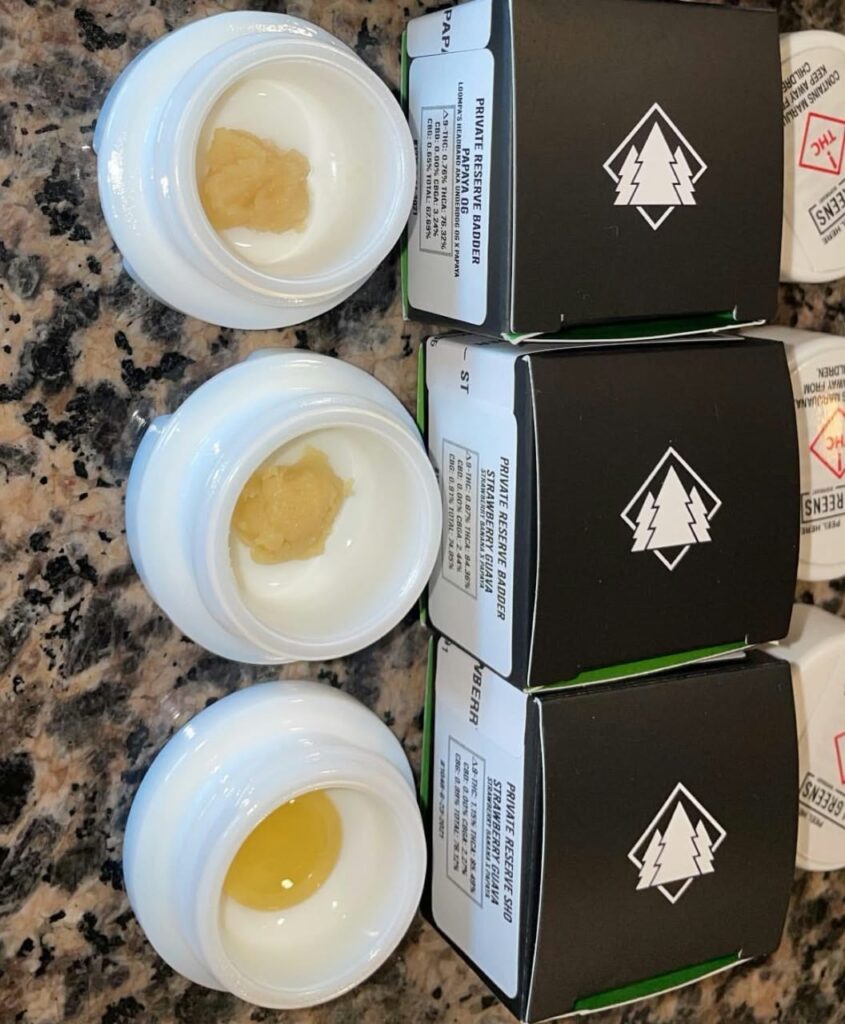
Whipping fresh press hash rosin is the step that follows a cure, and it’s what turns a jar of separated rosin and terpenes back into one smooth, even texture. Once the terpenes have pooled at the top of the jar, a dab tool or small spatula is used to fold everything back together, similar to folding batter rather than aggressively stirring it. Whipping fresh press hash rosin too fast or while it’s too cold can tear the texture and leave it grainy. Whipping it while it’s too warm can push out the very terpenes you’re trying to preserve. The goal is a slow, even fold at a moderate room temperature until the color and consistency look uniform all the way through.
How to Re-Whip Fresh Press Hash Rosin
How to re-whip fresh press hash rosin comes up when a jar that was already cured and whipped starts to separate again after storage, which can happen with temperature swings over time. The process is nearly the same as the first whip. Let the jar warm slightly to room temperature so the rosin is workable but not runny. Use a clean dab tool to fold the mixture, working from the edges toward the center, until it’s even again. Don’t rush this step. Overworking warm rosin is the most common way people accidentally cook off terpenes during a re-whip, which flattens the flavor even if the texture looks fine afterward.
Permanent Marker: The Cultivar Behind This Batch
Permanent Marker is the strain behind this particular fresh press batch, and unlike a lot of house-only genetics, its lineage is well documented. It’s a cross of Biscotti, Sherb BX, and Jealousy, bred by Seed Junky Genetics out of Los Angeles, and it was named Leafly’s 2023 Strain of the Year. The terpene profile typically runs high in myrcene, limonene, and caryophyllene, with linalool showing up as well, which lines up with the strain’s reputation for a pungent, gassy aroma layered with cookie sweetness and a faint soapy floral note. Post-wash, it’s known for strong trichome yield and a resin head structure that holds up well through both fresh press and cold cure styles.
Common Curing Mistakes to Avoid
A few mistakes account for most curing problems people run into. Storing rosin too warm speeds up terpene loss and can cause the texture to break down unevenly. Storing it too cold can slow separation to a crawl or make the rosin too hard to whip properly when the time comes. Opening the jar constantly to check on progress lets in air and humidity, which invites mold risk over a multi-week cure. And whipping too early, before separation is actually complete, just mixes unseparated rosin without doing much of anything, so it’s worth waiting for that visible terpene layer before reaching for a dab tool.
Who Should Cure vs Buy Already-Cured Rosin
How to cure freshly pressed rosin matters most if you’re buying fresh press specifically because you want to manage that process yourself, whether that’s for personal preference or because you like having control over texture. If you’d rather skip the wait, buying a rosin that’s already been cold-cured gets you a similar end texture without the multi-week storage commitment. Neither route is more correct than the other. It’s really about whether you want fresh press rosin as a starting point to work with, or a finished, shelf-stable product straight out of the jar.Product Specifications
Specifications Table 📋
| Attribute | Detail |
|---|---|
| Product Name | Permanent Marker Fresh Press Hash Rosin |
| Product Type | Solventless hash rosin, fresh press |
| Strain | Permanent Marker (Biscotti x Sherb BX x Jealousy, Seed Junky Genetics) |
| Classification | Indica-leaning hybrid |
| Extraction Method | Ice-water hash wash, mechanical press (heat and pressure) |
| Solvents Used | None, solventless |
| Wash Grade | Multi-pass, sifted for full-melt bags |
| Press Style | Low-temperature, fresh press (no extended cure) |
| Texture | Sauce off the press, budder-like after curing and whipping |
| Color | Light gold to amber |
| Available Sizes | 0.5g, 1g, 3.5g (varies by drop) |
| Lab Testing | Third-party tested, full COA via on-package QR code |
| Recommended Cure Window | 3-4 weeks at 45-70°F, if curing at home |
| Shelf Life | Best within 2-3 months refrigerated, longer once fully cured |
| Age Requirement | 21+ or valid medical card where applicable |
We don’t publish exact cannabinoid percentages here since they shift from batch to batch. Every package includes a QR code linking to that specific batch’s third-party COA, so you’re checking real, current numbers instead of a rounded marketing average.Flavor
Flavor 🍪
Permanent Marker fresh press rosin leads with a sweet, cookie-dough base that quickly gives way to a pungent gas note, with soapy floral undertones rounding things out. It’s a complex flavor that shifts a little between the inhale and the finish.Aroma
Aroma 👃
Cracking the jar hits you with dense, dank gas up front, backed by a sweet, almost bakery-like sweetness underneath. That soapy floral edge Permanent Marker is known for shows up faintly as it warms.Inhale & Exhale Experience
Inhale & Exhale Experience 💨
Inhale
Smooth at low dab temperatures, with the cookie sweetness arriving first before the gas notes build. Higher temperatures bring the pungency forward fast.
Exhale
A lingering, sweet-and-gassy finish with a light floral aftertaste. Clean vapor with minimal harshness when dabbed within the recommended low-temp range.For Sale Details
Details for Fresh Press Hash Rosin for Sale 🏷️
This fresh press hash rosin for sale listing reflects a small-batch run tied to fresh frozen harvest windows. Hash rosin doesn’t scale the way vape hardware or distillate does, since yield is capped by how much resin the wash actually produces.
- Sold in limited-batch drops tied to fresh frozen harvest windows
- Each package is dated and batch-coded for traceability
- QR-linked lab results specific to that batch
- Packaged in non-stick, UV-resistant containers to protect texture and terpenes
Features
Features ✨
Solventless
No butane, propane, or CO2 at any stage of extraction.
Fresh Press
Washed and pressed within a short window, no extended cold cure baked in.
Batch Traceability
QR-coded packaging links directly to that batch’s lab results.
Full-Spectrum
Nothing added, nothing winterized or refined out.
Cold Chain Packaging
Handled and shipped to protect terpene integrity from press to purchase.
Small-Batch Drops
Limited by real harvest and wash yield, not mass-produced.Quality
Rosin Quality Details 🏅
Quality in fresh press rosin comes down to color, consistency, and melt, all things you can check yourself. This batch is graded from full-melt bags, meaning the starting hash was already high-purity before it ever touched a press. Expect light gold to amber color, a sauce-like texture fresh off the press that firms into a stable budder if cured and whipped, and a clean melt with minimal residual plant material.
Exact potency and purity figures, including cannabinoid percentages, residual solvent screening, and microbial and pesticide panels, are published per batch through the QR code on the packaging rather than listed generically here, since a static page can’t stay accurate across different harvest runs.Terpene Profile
Terpene Profile 🧬
The hierarchy below reflects the typical, representative profile for Permanent Marker fresh press rosin, based on publicly available terpene data for the cultivar. Exact percentages shift batch to batch, so check the QR-linked COA on your specific package for lab-verified numbers.
Myrcene, earthy and herbal base noteDominant
Limonene, citrus and pungent sweetnessProminent
Caryophyllene, peppery, gassy spiceSupporting
Linalool, soapy floral noteTraceHighlights
Product Highlights 🌟
0Solvents Used
FreshPress Window
QRBatch COA Access
- Cookie-sweet, gassy flavor true to the Permanent Marker cultivar
- Solventless, full-spectrum, nothing refined or added
- Small-batch, traceable, and dated at every drop
- Cures and whips well for anyone who wants to manage texture at home
Why Choose Us
Why Customers Choose Fresh Press Rosin 🏆
Fresh press rosin earns repeat customers because it gives them the most control. Buy it fresh and dab it right away, or cure and whip it at home to build a shelf-stable texture on your own terms. That flexibility is a big part of why fresh press has become the format of choice for people who already know their way around solventless concentrates.
- Transparency: batch-specific QR-linked lab data instead of vague marketing claims
- Process integrity: mechanical extraction only, verifiable and solvent-free
- Flavor authenticity: minimal time between wash and press means less flavor drift
- Honest sourcing: documented genetics with a real, verifiable lineage
Storage
Storage Instructions 🧊
- Store in an airtight glass jar, not plastic
- Keep between 45 and 70°F if you’re actively curing
- Move to standard refrigeration once cured and whipped for everyday use
- Avoid direct light and frequent temperature swings, both degrade terpenes
- Keep sealed and out of reach of children and pets at all times
Usage Tips
Usage Tips 💡
- Dab low and slow, a lower nail temperature protects the terpenes fresh press rosin is known for
- Let the jar sit undisturbed for the full cure window before checking for separation
- Use a non-stick dab tool for whipping and re-whipping to avoid product loss
- Fold gently when whipping instead of stirring fast or aggressively
- If using in a rosin-compatible vape device, confirm compatibility before loading
Comparison
Fresh Press Rosin vs Similar Concentrates ⚖️
Here’s how fresh press rosin stacks up against the other solventless and solvent-based styles you’ll come across.
| Concentrate | Starting Material | Process | Flavor Profile |
|---|---|---|---|
| Fresh Press Hash Rosin | Fresh frozen flower, washed same-day | Solventless, ice water plus press | Bright, vivid, closest to raw plant |
| Cold Cure Rosin | Fresh frozen flower, cold-cured hash | Solventless, ice water, cure, press | Mellower, rounder, aged sweetness |
| Live Resin | Fresh frozen flower | Solvent-based (butane/propane), purged | Often very high terpene expression |
| Flower Rosin | Dried, cured flower | Solventless, pressed directly | More muted, cure-driven flavor |
FAQ
10 FAQs ❓
How do you cure freshly pressed rosin?
Seal it in an airtight glass jar and store it between 45 and 70°F for about three to four weeks. The terpenes separate and rise to the top, then a light whip homogenizes the mixture.
Do you have to cure fresh press rosin?
No. It’s ready to dab straight off the press. Curing changes texture and shelf stability, but it’s optional.
Can you use fresh cannabis in a rosin press?
Not undried, wet flower. Fresh frozen material is flash-frozen after harvest and washed into hash before pressing, never pressed raw and wet.
How do you re-whip fresh press hash rosin?
Warm it slightly to room temperature, then fold it gently with a dab tool until the texture is even again. Avoid overworking it while warm.
What strain is Permanent Marker?
An indica-leaning hybrid bred by Seed Junky Genetics, a cross of Biscotti, Sherb BX, and Jealousy, named Leafly’s 2023 Strain of the Year.
Why does fresh press rosin change texture over time?
It’s jarred without post-processing, so moisture and terpene content keep shifting slightly, causing it to soften, separate, or firm up.
What’s the difference between whipping and curing rosin?
Curing is the resting period that lets terpenes separate. Whipping is the step after, folding the separated layers back into one texture.
Is fresh frozen bubble hash rosin the same as fresh press rosin?
Fresh frozen bubble hash is the starting material. Fresh press rosin is what you get when that hash is pressed within a short window of the wash.
Does curing rosin change the potency?
Not meaningfully. Curing mostly affects texture and shelf stability, not cannabinoid content.
How should I store fresh press rosin while it cures?
Use an airtight glass jar in a cool, dark spot between 45 and 70°F, and avoid opening it often during the cure.Customer Feedback
What Customers Consistently Say 💬
Same standard we’ve kept across this whole project: no invented named reviews presented as real. Here’s what we can honestly say based on the pattern in the feedback we get, plus an offer below if you’d rather collect real ones.
Common theme: flavor
Customers most often mention the cookie-and-gas flavor holding up well through a low-temp dab, especially compared to more cured, mellow batches.
Common theme: texture
Fresh press buyers frequently ask about curing at home, which is part of why this guide exists.
Common theme: transparency
The QR-linked batch data gets called out as a trust signal more than any other single feature.
Want a short review-request message to send real customers instead? Just ask and I’ll draft one.Compliance
fresh frozen bubble hash rosin press, can you use fresh cannabis in a rosin press, how to re whip fresh press hash rosin, whipping fresh press hash rosin fresh frozen bubble hash rosin press, can you use fresh cannabis in a rosin press, how to re whip fresh press hash rosin, whipping fresh press hash rosin