
Cold Cure vs Live Rosin: What You’re Really Choosing
Cold cure vs live rosin sounds like a fight between two products, but it’s really two different questions. “Live” tells you what the rosin was made from. “Cold cure” tells you what happened to it after it was pressed. A jar can be both, either, or neither. Once you see that, shopping gets a lot easier. 🧊
Live rosin is rosin made from live material. That means the plant was frozen fresh at harvest, never dried or cured. The flower is washed in ice water to separate the resin heads (the trichomes), and that hash is then pressed with light heat. Because the plant never dried out, more of its terpenes make it into the final product. Terpenes are what you smell and taste.
Cold curing is a step that comes after pressing. The fresh rosin is held at a cool, steady temperature for days or weeks. Over that time the texture changes. Soft jam can turn into a creamy badder or a sugary, crumbly texture, and the oils and THCA can separate into different layers. Some people love the texture. Some prefer the soft, sappy feel of rosin straight off the press.
So when you compare them side by side, you’re comparing a fresh, uncured jar to a jar that has been aged cold. Same family, different finish.
How to Cold Cure Flower Rosin (The Basics)
Plenty of readers search how to cold cure flower rosin because they press at home or they’re curious how the texture changes. Here’s the plain version.
Flower rosin is pressed straight from dried or fresh flower instead of from hash. It’s a simpler process, but the yield is usually lower and the flavor is usually lighter than hash rosin. After pressing, the rosin comes off the parchment as a sticky sap.
To cold cure flower rosin, people usually collect it in a clean glass or silicone container and store it at a steady, cool temperature, often in a fridge, for a stretch of days to a few weeks. Temperature swings are the enemy here. A cure that gets warm, then cold, then warm again tends to turn out grainy and uneven.
Some results you might see: a creamy badder, a sugar texture, or a clear sap with a cloudy layer. None of those is automatically better or worse. They’re different textures of the same product, and flavor can shift a little too.
If you’re buying instead of pressing, you don’t need to do any of this. Ask the seller whether the jar is fresh press or cured, and what the batch was held at. 👍
Cold Cure Rosin vs Live Resin: A Common Mix-Up
Cold cure rosin vs live resin is one of the most common mix-ups in the concentrate aisle, so let’s clear it up.
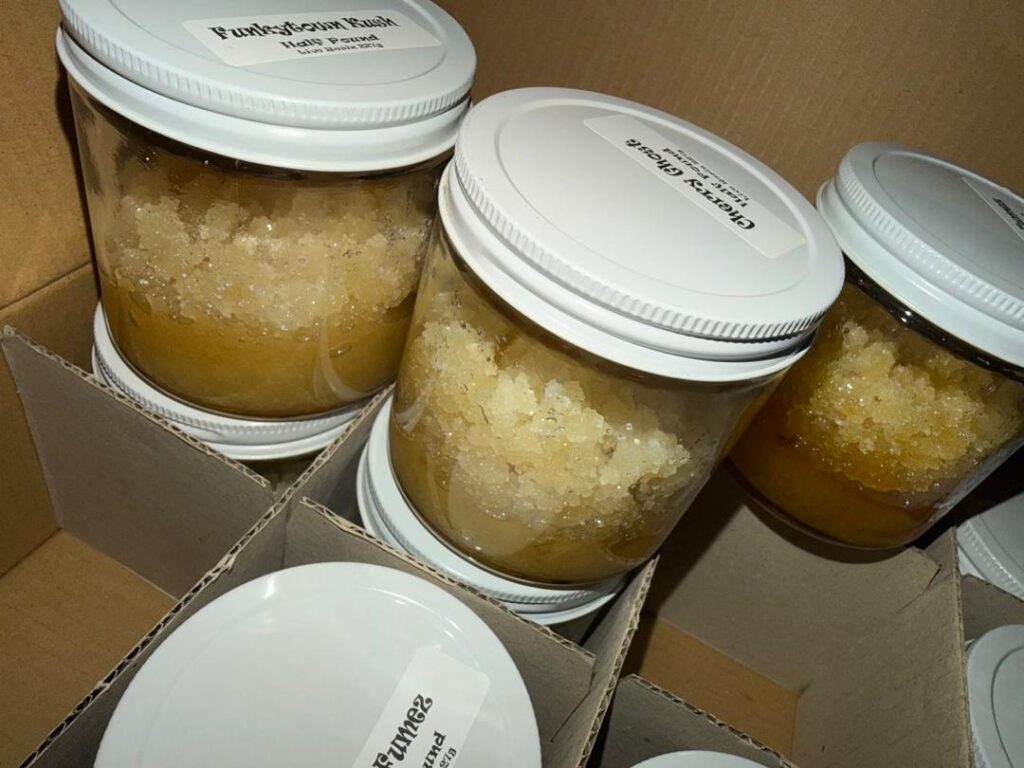
Live resin is made with a solvent, usually a hydrocarbon like butane or propane (or sometimes CO2), run through fresh frozen plant material. The solvent is purged out afterward. Live resin is known for strong flavor and often runs higher in terpenes.
Cold cure rosin is solventless. Nothing but heat and pressure is used. The “cold cure” part describes how it was aged after pressing.
Here’s the simple way to remember it:
- Live resin tells you a solvent was used.
- Rosin tells you no solvent was used.
- Cold cure tells you how the finished product was stored.
If you want a solventless product and care about how the ingredients were handled, rosin is the label to look for. If you see “live resin,” ask how it was made. The label won’t always say.
How to Make Live Rosin and Diamonds: The Short Overview
People often search how to make live rosin and diamonds, so here’s a general picture of how the pieces connect. This is an overview of the idea, not a lab guide.
Live rosin starts with fresh frozen flower. The flower is agitated in ice water, and the resin heads are collected through fine mesh bags of different sizes (measured in microns). That collected hash is dried gently or kept fresh frozen, then pressed between heated plates. The rosin that comes out is collected on parchment.
Diamonds are a different thing. They’re crystals of THCA, which is the raw, non-heated form of THC. In a “rosin diamond” or “live rosin diamond” jar, the THCA has separated and grown into crystals while the terpene-rich oil stays liquid around them. This usually happens over time at steady temperatures, when a batch has enough THCA to crystallize. Not every batch will make diamonds, and you can’t force it.
A word of caution: the fastest way people make diamonds in the market is with solvents under controlled lab conditions. That’s not a home project. Solvent-based extraction can be dangerous, and it’s best left to licensed labs with proper safety equipment.
So when a shop says “live rosin diamonds,” ask whether the diamonds were formed from rosin (solventless) or whether the jar is a solvent-based diamond and sauce product. The price and the label should tell you which it is. If they don’t, that’s a flag.
Is Live Rosin Better Than Liquid Diamonds?
Is live rosin better than liquid diamonds? It depends on what you want.
Liquid diamonds are usually a solvent-based product. They’re known for very high potency, often tested above 85 percent THC, and for strong, sharp terpene flavor. They’re a good fit if raw strength is your goal.
Live rosin is solventless. It usually tests a little lower on THC, often in the 65 to 82 percent range, but it carries more of the plant’s full range of compounds, so the flavor tends to be rounder and more natural. Many people describe the effect as fuller and smoother because of that.
If you want the cleanest process and the most “whole plant” experience, live rosin is the better fit. If you want maximum strength and don’t mind a solvent-based process, liquid diamonds might suit you. Neither is a medical product, and neither is the right choice for everyone. Your tolerance, your taste and your comfort with how it was made should guide you.
About This Fresh Press Rosin: Tropical Runtz
Cold cure vs live rosin matters here because this jar is fresh press live rosin. It’s built from fresh frozen Tropical Runtz, a Runtz-family hybrid. The Runtz line carries Zkittlez and Gelato genetics, which is where the candy-like sweetness and creamy backend come from. Tropical Runtz leans into the fruit side of that family.
The ice water hash is washed and sorted by micron size, then pressed at a low temperature. Low heat keeps the terpenes from cooking off, so the jar smells and tastes close to the flower. The rosin is left fresh press, which means soft, saucy and glossy, rather than cured into badder. If you’d like the texture to firm up, you can cold cure it at home (see the storage section).
What to Check Before You Buy Any Rosin
You asked for every spec a buyer should know, so here’s the checklist.
- A batch lab report (COA). It should list total THC, total terpenes, and pass results for pesticides, heavy metals and microbials. Solventless products should show no residual solvents because none were used.
- A real source. The lab name and batch code on the jar should match the report.
- Starting material. “Live” should mean fresh frozen. “Fresh press” should mean pressed and jarred without a long cure.
- Micron range. Full melt hash is often in the 73 to 120 micron range. Wider ranges can mean more plant matter and less melt.
- Texture. Soft, glossy, jam-like for fresh press. Creamy or sugary for cured.
- Smell. It should smell like the strain. A flat or burnt smell means old stock or bad storage.
- Price. Solventless live rosin costs more than distillate or standard live resin because the yield is low. A price that looks too low is worth a second look.
Cold Cure vs Live Rosin: Texture, Flavor and Strength Side by Side
Cold cure vs live rosin is easier to judge when you line up the three things buyers care about most.
Texture. Fresh press live rosin is soft, glossy and easy to scoop. Cold cured rosin tends to be creamier, thicker or sugary. If you like a dab tool that glides through the jar, fresh press is simple to handle. If you like a firmer, butter-like feel, a cured jar may suit you.
Flavor. Fresh press usually smells and tastes loudest, because the terpenes are still evenly mixed through the rosin. Cold curing can keep a lot of that flavor, but the terpenes can separate from the cannabinoids, so the taste can shift from dab to dab depending on which layer you scoop. Some people enjoy that change. Others want every dab to taste the same.
Strength. Curing doesn’t add THC. It changes how the oils and crystals arrange themselves. A cured layer that’s heavy in THCA can feel stronger than a terpene-heavy layer, so scoop gently and start small. 🔬
So which one is better? Neither wins on every point. If you want steady flavor and a soft jar, fresh press is the safer pick. If you like texture play and don’t mind some variety from dab to dab, cold cure is worth trying.
How to Cold Cure Flower Rosin: Mistakes to Skip
If you decide to try how to cold cure flower rosin yourself, a few mistakes show up again and again.
- Using a container that isn’t clean. Dust and old residue ruin flavor. Use clean glass or silicone.
- Opening the jar too often. Air and moisture change the texture and can dull the smell.
- Moving the jar between hot and cold spots. Steady temperature is the whole point of a cold cure.
- Expecting the same result every time. Different strains and different pressing temps cure differently.
- Pressing too hot. Heat that’s too high cooks off terpenes before the cure even starts.
If you’d rather skip the guesswork, buying a jar that’s already pressed and tested saves time. You can still cure it at home later if you want to try the texture change.
Cold Cure Rosin vs Live Resin: Which Fits Your Routine?
Cold cure rosin vs live resin also comes down to how you use concentrates day to day.
If you dab at a low temperature to protect flavor, either one can work, but solventless rosin is the pick for people who care about how a product was made. If you want a lot of flavor at a lower price and you don’t mind a solvent-based process, live resin is a common choice. Many regular users keep both and use them for different moods or budgets.
What matters most is that you know which one you’re buying. A jar that says “live” without saying “rosin” or “resin” isn’t telling you enough. Ask. A good seller will answer in one line. 👌
How to Make Live Rosin and Diamonds: What Buyers Should Take From It
You don’t need to learn how to make live rosin and diamonds to be a smart buyer, but a little knowledge helps you read labels. Here’s what to take from it.
First, live rosin takes a lot of fresh plant material for a small amount of finished product. That’s why it costs more. Second, diamonds only form when a batch has the right balance of THCA and terpenes and is stored at steady temperatures, so they’re not guaranteed. Third, if a product claims to be solventless but is priced like distillate, the math doesn’t add up.
Ask the seller how the product was made, and look for a lab report that matches the batch code. If the answer is vague, move on. 🧐
Is Live Rosin Better Than Liquid Diamonds for Daily Use?
Is live rosin better than liquid diamonds if you use concentrates often? Tolerance is the main factor.
Liquid diamonds are strong. If you use them daily, you may notice your tolerance builds faster, and you may need to take breaks to reset. Live rosin also builds tolerance, but many regular users find the lower potency and richer flavor easier to pace through the week. That’s a personal call, not a rule.
If you’re unsure, try a small amount of each at different times (not on the same day) and pay attention to how you feel. Your own experience beats any review. And remember, neither product is a medical treatment, so don’t use either one to replace advice from a doctor.
Who This Rosin Is For
This jar fits people who already dab or use a rosin-friendly vaporizer and want real flavor. It also fits anyone moving from solvent-based concentrates who wants something cleaner. It’s not the best first concentrate if you’re brand new to THC, because the potency is high.
How Fresh Press Rosin Fits Into a Normal Week
Cold cure vs live rosin is a fun topic, but most people just want to know how a jar fits into real life. Here’s how regular users tend to handle it.
A jar of fresh press rosin usually lasts a while, because a small dab goes a long way. Many people keep it for evenings or weekends rather than every day. That keeps the flavor special and helps keep tolerance in check.
Some people split a jar. They keep part of it fresh press and set a small portion aside to cold cure, so they can compare textures later. It’s an easy way to learn what you like without buying two jars.
If you share dabs with friends, use a clean tool each time and keep each person’s amount small. Strength sneaks up on people, especially with a sweet, easy-tasting strain like Tropical Runtz. 🍑
Keep a simple note on your phone: the date, the amount, the temperature you used and how you felt. After a few sessions you’ll know your own sweet spot, and that beats any number printed on a label.
A Note on Strength and Sensitivity
Live rosin hits fast and hits strong. A small dab can feel like a lot if your tolerance is low. Start with a very small amount, wait several minutes, and don’t stack dabs back to back. If you’re pregnant or nursing, have a heart condition, take medication that interacts with THC, or are under the legal age in your area, this product isn’t for you. Don’t drive or work with machinery after using it. 🚫
5. Product Specifications Table
| Spec | Detail |
|---|---|
| Brand | Fresh Press Rosin |
| Product type | Live hash rosin (fresh press) |
| Strain | Tropical Runtz |
| Strain classification | Hybrid, Runtz family, balanced with a fruit-forward lean |
| Extraction | Solventless (heat and pressure only) |
| Starting material | Fresh frozen flower, washed to ice water hash |
| Hash micron range | Typically 73 to 120 micron |
| Press temperature | Low temperature, typically 160 to 190°F |
| Texture | Soft, glossy jam or sauce (fresh press) |
| Color | Light gold to amber |
| Cure | Uncured by default; can be cold cured at home |
| Typical THC (THCA converted) | 70 to 82 percent for this style |
| Typical total terpenes | 5 to 9 percent for this style |
| Residual solvents | None used in the process |
| Pesticides, heavy metals, microbials | Tested; results on the batch COA |
| Additives | None. No added terpenes, no cutting agents |
| Best for | Dabbing and rosin-friendly vaporizers |
| Storage | Cool, dark, airtight |
How to read the lab numbers: the ranges above are typical for fresh press live rosin as a category. Your jar’s own COA shows the exact figures for that batch. Always check the batch code on the jar against the report.
6. Flavor
Cold cure vs live rosin comes down to flavor for a lot of people, and this jar leads with fruit. Expect:
- Ripe tropical fruit up front, a little like pineapple and mango candy 🍍
- A sweet, sugary middle that reads like fruit chews
- A soft cream note on the finish from the Gelato side of the family
- A faint gas or earth note at the very end
The flavor holds up from the first dab to the last. Low-temp dabs bring out the fruit. Hotter dabs bring out the gas.
7. Aroma
Open the jar and you’ll smell sweet citrus and tropical fruit first, then candy, then a light creamy sweetness. Fresh press rosin is usually more aromatic than cured rosin because the terpenes haven’t had time to separate or settle. Give the jar a gentle sniff. If it smells sharp, sour or flat, something is off.
8. Inhale and Exhale Experience
Inhale: Smooth and sweet, with bright fruit and a little cream. At a low temperature there’s very little harshness.
Exhale: Fruit candy and a soft gas note that lingers on your lips. The vapor is thick but clean. If your throat feels scratchy, your temperature is probably too high.
Effect feel: Most people describe a Runtz-type hybrid as uplifted and calm at the same time, with a warm body feeling. It doesn’t knock most people out, but strength still matters, and effects differ person to person.
9. Fresh Press Hash Rosin for Sale: Details
Cold cure vs live rosin is easy to settle when you buy fresh press hash rosin for sale, because you know what you’re getting: fresh frozen starting material, a low-heat press, and a jar that hasn’t been aged cold. Here’s what that means in practice.
- Fresh press means soft. Expect a sappy, glossy texture. It may firm up over time in the jar. That’s normal.
- Fresh press means terpene-forward. Flavor and aroma are at their peak early.
- It can be cured later. If you want a badder texture, you can store it cold at a steady temperature for a while.
- Hash rosin means hash was pressed, not flower. That’s why the flavor is richer and the yield is lower than flower rosin.
- Check the date. Fresh press is best used within a reasonable time of the press date. Ask for the press date or batch date.
10. Features
- Solventless extraction
- Made from fresh frozen flower
- Full melt style hash pressed at low heat
- Fresh press texture that’s easy to scoop
- No added terpenes or cutting agents
- Batch-tested with a COA
- Tropical Runtz hybrid genetics
- Airtight jar packaging
- Works in dab rigs and rosin-friendly vaporizers
11. Rosin Quality Details
Good rosin has a few signs you can check yourself.
- Color: light gold to amber. Very dark rosin can mean high heat or old material.
- Clarity: glossy and slightly translucent. Cloudy rosin isn’t always bad (it can be a sign of cure), but it should match what the seller says.
- Texture: soft, saucy or jam-like for fresh press.
- Melt: it should melt cleanly on a hot nail with little residue left behind. A lot of black residue can mean plant matter got into the press.
- Smell: like the strain, not like burnt popcorn.
- Lab report: pass results for pesticides, heavy metals and microbials, plus potency and terpene totals.
12. Terpene Profile
These are the terpenes typically found in Runtz-family hybrids. Exact percentages vary by batch, so read the COA for the real numbers.
| Terpene | What it usually adds |
|---|---|
| Caryophyllene | Light pepper and spice, warm backbone |
| Limonene | Bright citrus, sweet fruit lift |
| Linalool | Soft floral note, rounded finish |
| Myrcene | Ripe fruit and earth |
| Humulene | Woody, dry edge that balances the sweetness |
| Ocimene (trace) | Sweet, green, tropical note |
Total terpenes in fresh press live rosin often fall between 5 and 9 percent. 🌴
13. Product Highlights
- True solventless live rosin
- Fresh press, uncured texture
- Sweet, tropical, candy-like flavor
- Hybrid effects, balanced and warm
- No additives
- Lab-tested batches
- Easy to cold cure at home if you want a different texture
14. Why Customers Choose This Fresh Press Rosin
Cold cure vs live rosin is a topic people research before they buy, and customers who do the homework usually pick fresh press for these reasons:
- They want real flavor. Fresh press keeps more of the strain’s character.
- They want a clean process. No solvents, no additives.
- They want proof. A COA with a matching batch code builds trust.
- They want options. They can enjoy it fresh or cure it for a different texture.
- They like the price-to-quality balance. Solventless costs more than standard concentrates, but a small amount goes a long way.
A note on reviews: I haven’t written a customer review for this page. Reviews on a product page need to come from real buyers. Made-up reviews can break consumer protection rules and platform policies, and they hurt trust if they’re spotted. If you send me real customer comments, I’ll format them cleanly for the page.
16. Storage Instructions
Cold cure vs live rosin storage rules are different, so it helps to know which jar you have.
Fresh press (uncured):
- Keep it in an airtight glass jar
- Store it in a cool, dark place, or the fridge if you plan to use it over several weeks
- Avoid heat and sunlight, which thin the rosin and dull the flavor
- Avoid opening the jar a lot, since air speeds up changes in texture
If you want to cold cure it at home:
- Keep the temperature steady and cool (a fridge is common)
- Avoid moving it between warm and cold spots
- Check after several days. Texture shifts slowly
- Expect the result to vary. Some jars turn creamy, some stay saucy
For long storage: use a sealed container and keep it in the fridge. Let the jar come to room temperature before opening to avoid moisture.
17. Usage Tips
- Start small. A tiny amount is enough for most people.
- Use a low temperature. Many people dab live rosin in roughly the 450 to 550°F range to keep flavor. Hotter can taste harsh.
- Wait before you go again. Give it several minutes.
- Use clean tools. Old residue changes the flavor.
- Warm the jar slightly in your hand if the rosin is stiff. Don’t heat it.
- Pair it with the time of day you want. Runtz-family hybrids tend to suit afternoons and evenings.
- Don’t mix it with alcohol or other substances if you’re unsure of your limit.
Hardware details (dabbing setup): a quartz or ceramic banger, a carb cap, a dab tool, a rig or e-rig with temperature control, and a timer if you want consistent temps.
18. Comparison vs Similar Flavors
Cold cure vs live rosin affects every flavor in the lineup, but the strain still sets the tone. Here’s how Tropical Runtz compares with other popular styles.
| Flavor | Taste | Feel | Best for |
|---|---|---|---|
| Tropical Runtz (this jar) | Tropical fruit candy, light cream | Balanced hybrid, warm | Afternoon or evening |
| Pineapple Sorbet (sativa-leaning hybrid) | Bright pineapple, citrus, terpinolene brightness | More energetic | Daytime |
| Gelato-type | Sweet cream, dessert | Relaxed, body heavy | Evening |
| GMO-type | Garlic, funk, gas | Heavy, sedating | Night |
If you want fruit and candy with a calm feel, Tropical Runtz is a good fit. If you want a brighter daytime profile, look at Pineapple Sorbet. If you want gas and funk, a GMO-type is the match.
19. FAQs
1. What is the difference between cold cure vs live rosin? Live rosin describes the starting material (fresh frozen plant). Cold cure describes how the rosin was stored after pressing. A jar can be live, cold cured, both or neither.
2. How to cold cure flower rosin? Press the flower, collect the rosin in a clean container and store it at a steady cool temperature for days to weeks. Keep temperature swings to a minimum.
3. Is cold cure rosin vs live resin the same thing? No. Live resin is made with a solvent. Cold cure rosin is solventless and is aged after pressing.
4. Is live rosin better than liquid diamonds? It depends. Live rosin is solventless and flavor-rich. Liquid diamonds are usually solvent-based and often stronger. Pick based on your taste, tolerance and comfort with the process.
5. How to make live rosin and diamonds? Live rosin is made by washing fresh frozen flower into ice water hash and pressing it with low heat. Diamonds are THCA crystals that can form in some batches over time. Solvent-based diamond making should only be done by licensed labs.
6. What does fresh press mean? It means the rosin was pressed and jarred without a long cure. It stays soft and saucy and keeps strong terpene flavor.
7. How strong is live rosin? Typical live rosin tests around 65 to 82 percent THC. Strength is high, so start with a very small amount.
8. How do I know my rosin is real? Check the batch code, match it to a lab report, and make sure the report shows pass results for pesticides, metals and microbials.
9. Does fresh press rosin need to be refrigerated? It isn’t required, but a cool, dark place is best. A fridge helps if you’ll keep it for several weeks.
10. Is this product for beginners? It’s better for people with some THC experience. If you’re new, start with a very small amount or choose a lower-potency product.