
Can you press fresh bud into rosin? It’s one of the most common questions people ask when they’re first learning about solventless concentrates, and the answer is yes, with a few important details that affect how good the final product turns out. Pressing fresh bud into rosin is entirely possible, and it’s actually one of the most respected methods in the concentrate world today. But there’s a right way and a less effective way to do it, and understanding the difference will help you shop smarter.
The short version: fresh bud gets frozen almost immediately after harvest, usually within a few hours, to lock in trichomes and terpenes before they have a chance to degrade. That fresh frozen bud can then either go straight into a rosin press as whole flower, known as flower rosin, or it can first get washed into ice water hash and then pressed, which is the method most premium fresh press rosin brands use. Both start with the same fresh frozen material. The difference is what happens right before the press.
How to turn flower into fresh press rosin
How to turn flower into fresh press rosin starts with the freeze. Growers harvest the plant and freeze it whole, sometimes within hours of cutting it down. This fast freeze is critical because it locks the trichome heads, the tiny resin glands that hold cannabinoids and terpenes, in place before they can dry out or break down. From there, producers have two paths. Direct flower press involves loading the frozen bud straight into a heated plate press, applying pressure, and collecting the rosin that squeezes out. Ice water hash press involves washing the frozen bud in cold water first, using mesh bags to separate trichome heads from plant material, and then pressing that concentrated hash. Ice water hash pressing generally produces a cleaner, higher quality product because it removes plant matter before the press ever gets involved.
What is fresh press rosin made of
What is fresh press rosin made of, really, when you strip it down to basics? Just three things: fresh frozen cannabis flower, ice and water for the wash step, and nothing else. No butane, no propane, no ethanol, no CO2. The heat and pressure from the press are what pull the resin out of the trichome heads, not any added chemical. That’s the entire appeal of solventless rosin. It’s about as close as you can get to a pure, unprocessed extract of the plant itself.
Fresh press rosin temp: what actually happens during pressing
Understanding fresh press rosin temp helps explain why texture and quality vary from batch to batch. Most fresh press rosin gets pressed somewhere between 160 and 220 degrees Fahrenheit, with pressure applied for anywhere from a few seconds to a couple minutes depending on the material. Lower press temperatures, closer to 160-180°F, tend to preserve more terpenes and often produce a softer, more sauce-like consistency. Higher press temperatures, closer to 200-220°F, extract resin faster and can produce a firmer, more stable budder, but at some cost to the lighter terpenes. Extractors dial in their press temp based on the specific strain and the texture they’re aiming for.
Details for fresh press hash rosin for sale
Any fresh press hash rosin for sale should give you the full picture before you buy: the strain, the freeze date, the wash date if hash was involved, the press date, and current lab results. Texture will shift batch to batch based on moisture content, wash quality, and press settings, showing up as a scoopable budder, a firmer batter, or a looser sauce with visible terpene separation. None of these is inherently better, they’re just different results from the same solventless process applied to different starting material.
Rosin quality details that actually matter
Quality comes down to a handful of checkable factors. Full melt is the standard to look for, meaning the rosin bubbles and melts completely on a hot dab nail without leaving behind a waxy residue. Color offers a clue too, with lighter gold to amber shades usually pointing to cleaner starting material and a careful process, while darker rosin often means more plant matter made it through. Consistency across a full batch also matters, since a controlled, well-run press produces jars that look and behave the same from start to finish.
Fresh press rosin terpene profile and flavor
Terpene content depends entirely on the strain and the freeze-to-press timeline, so always check the current COA for exact numbers on any specific batch. In general, fresh press rosin tests higher in total terpenes than concentrates made from dried and cured flower, simply because fewer volatile compounds have had time to evaporate before extraction. Expect flavors that stay close to the living plant, whether that’s bright citrus, heavy gas, sweet candy, or earthy pine, depending entirely on the genetics behind that batch.
Strain classification and what to expect
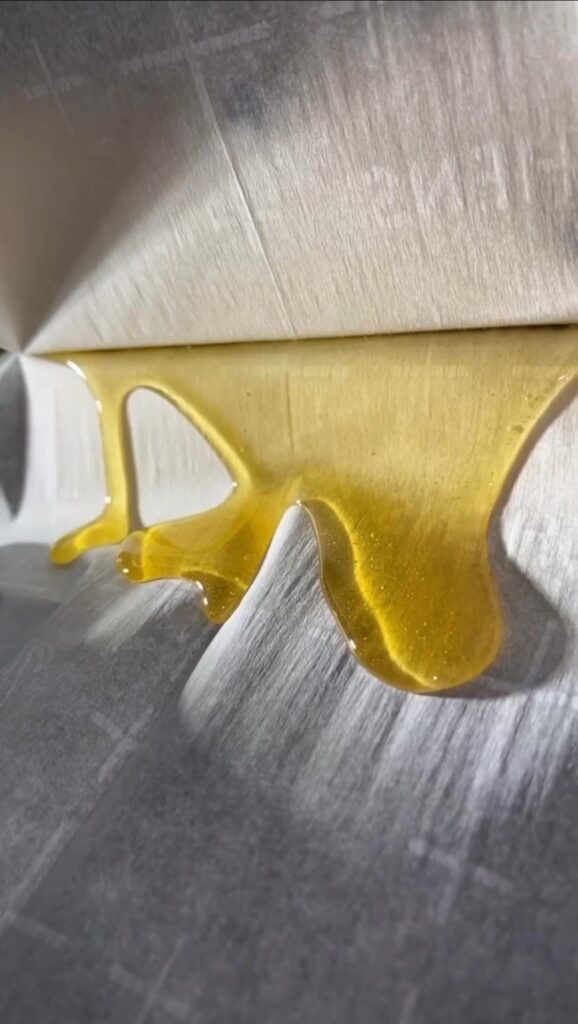
Fresh press rosin can be made from indica, sativa, or hybrid genetics, and the classification carries through into the final product’s flavor and effects. As an example, a batch pressed from Gelato #41, a hybrid known for its sweet, dessert-forward terpene profile, will taste and hit noticeably different than one pressed from a sativa-leaning strain with citrus or pine-dominant terpenes. Always check the specific strain listed for the batch you’re buying, since the quality of a fresh press rosin is only as good as the flower that went into it.
Why fresh bud makes a difference over dried and cured material
The reason fresh bud matters so much comes down to timing. Once flower is cut, drying and curing take days to weeks, and during that window, lighter, more volatile terpenes start to evaporate. Freezing the bud almost immediately after harvest skips that entire window, preserving a terpene profile that’s much closer to what the living plant actually produced. That’s the whole reason “can you press fresh bud into rosin” has become such a popular question among concentrate shoppers looking for the most flavorful option available.
Understanding how fresh bud becomes rosin, from the freeze through the press, gives you everything you need to shop with confidence. You’ll know what to look for on a label, what questions are worth asking a seller, and what to expect once that jar is actually in your hands. 🔥
5. Product Specifications Table
| Spec | Detail |
|---|---|
| Extraction Method | Fresh press, ice water hash pressed from fresh frozen bud |
| Strain (Example) | Gelato #41 (Hybrid) — swap for actual strain per batch |
| THC Content | Placeholder — insert verified COA value |
| Total Terpenes | Placeholder — insert verified COA value |
| Texture | Budder / Batter / Sauce (varies by batch) |
| Color | Light gold to amber |
| Solvent Content | 0% — solventless |
| Press Temperature Range | 160°F–220°F |
| Wash Method | Ice water extraction, fresh frozen material |
| Net Weight | Placeholder — insert per SKU (e.g., 1g, 3.5g) |
| Lab Tested | Yes — placeholder, attach current COA |
| Shelf Life (Properly Stored) | 6–12 months |
6. Flavor
Expect flavor that stays close to the strain itself, whether that leans citrus, gas, candy, or earthy depending on the genetics. Since fresh bud skips the drying and curing window, the flavor comes through closer to the living plant than most other concentrate types. 🍋
7. Aroma
Pop the lid and the aroma usually hits fast and loud, often more pungent than dried flower from the same strain. That immediate, strong smell is one of the clearest signs a batch was actually pressed from fresh, properly frozen bud.
8. Inhale & Exhale Experience
Inhale: Smooth on a low temp dab, with flavor arriving first before any harshness. True full melt rosin shouldn’t scratch the throat.
Exhale: Flavor carries through the exhale, often described as tasting like the actual strain rather than just “concentrate.” Effects tend to build gradually, typical of a product with its full terpene and cannabinoid profile still intact.
9. Details for Fresh Press Hash Rosin for Sale
Every listing should include the strain, freeze date, wash date, press date, net weight, and current lab results. Buyers should also be told whether it’s a single strain batch or a blend. A listing missing this information is worth a second look before you buy, since transparency is one of the clearest signs of a quality solventless brand.
10. Features
- 🌿 Pressed from fresh frozen bud, not dried and cured flower
- 🧊 Solventless ice water extraction
- 🔥 Full melt consistency
- 📋 Batch-specific lab testing available
- 🍯 Multiple textures depending on press temp (budder, batter, sauce)
- 📦 Packaged in non-stick, airtight containers
11. Rosin Quality Details
Quality control starts the moment the flower is cut. Fresh bud needs to be frozen quickly and handled carefully to protect trichome integrity before it ever reaches the press. During the wash, water temperature and agitation time affect how clean the resulting hash comes out. During the press, temperature and pressure need to be dialed in per strain, since some flower presses better hot and fast while other genetics need a slower, lower temp squeeze. Getting all of this right produces true full melt rosin: no wax residue, no leftover plant matter, just clean, bubbling concentrate.
12. Terpene Profile
Terpene content varies by strain and batch, so always check the current COA for exact figures. Fresh press rosin generally tests higher in total terpene percentage than rosin made from cured flower, since fewer volatile compounds are lost before the press. Common terpenes across batches include myrcene, limonene, caryophyllene, pinene, and linalool, with the exact ratio depending entirely on the genetics used.
13. Product Highlights
- Pressed from fresh frozen bud for maximum terpene retention
- 100% solventless extraction process
- Full melt, lab-tested concentrate
- Small batch production for quality control
- Available in multiple textures and strain options
14. Why Customers Choose Fresh Press Rosin
Customers keep choosing fresh press rosin because the flavor makes the case for itself. Once you dab a properly made batch pressed from fresh bud, it’s hard to go back to something that lost half its terpenes during a slow cure or a harsher extraction process. On top of flavor, the solventless label matters to a lot of buyers who want full transparency on what went into their concentrate: fresh flower, ice, water, heat, and pressure, nothing else.
15. topic Flip Section
- Can you press fresh bud into fresh press rosin? Yes, as long as the flower is frozen fast enough to protect the trichomes.
- Many first-time buyers ask can you press fresh bud into fresh press rosin before trying their first jar.
- The direct answer to can you press fresh bud into fresh press rosin is yes, and it’s one of the most respected methods available.
- Understanding can you press fresh bud into fresh press rosin starts with knowing how the freeze-to-press timeline works.
- If you’ve wondered can you press fresh bud into fresh press rosin, the process is simpler than most people expect.
- Learning how to turn flower into fresh press rosin starts with a fast freeze right after harvest.
- The full process of how to turn flower into fresh press rosin involves freezing, washing, and pressing under heat.
- Most producers explain how to turn flower into fresh press rosin the same way: freeze fast, wash carefully, press with control.
- Skipping steps in how to turn flower into fresh press rosin usually shows up as lower quality in the final product.
- A clean version of how to turn flower into fresh press rosin relies on ice water extraction before the press.
- What is fresh press rosin made of? Fresh frozen flower, ice, water, heat, and pressure. Nothing else.
- When people ask what is fresh press rosin made of, the simplicity of the ingredient list often surprises them.
- The honest answer to what is fresh press rosin made of is that it’s one of the cleanest concentrates you can buy.
- Knowing what is fresh press rosin made of helps explain why solventless products carry a premium price.
- There’s no mystery to what is fresh press rosin made of, it’s plant, water, and mechanical pressure only.
- Dialing in fresh press rosin temp is one of the biggest factors in final texture.
- A lower fresh press rosin temp often produces a softer, sauce-like consistency.
- A higher fresh press rosin temp typically yields a firmer, more stable budder.
- Every batch’s fresh press rosin temp gets chosen based on the strain and desired texture.
- Getting the fresh press rosin temp right is one of the clearest signs of an experienced press operator.
16. Storage Instructions
- Store in an airtight, non-stick silicone or glass container.
- Keep away from direct light and heat sources.
- Refrigerate for short-term freshness, freeze for longer storage.
- Let the container reach room temperature before opening to avoid condensation.
- Use clean dab tools every time to avoid introducing contaminants.
17. Usage Tips
- Use a low temp dab (450-550°F) to preserve flavor and avoid burning off terpenes.
- Let refrigerated or frozen rosin sit at room temperature for a few minutes before handling, since cold rosin is harder to work with a dab tool.
- Start with a small dab if you’re new to solventless concentrates, since potency runs higher than flower.
- Reseal your container right after each use rather than leaving it exposed to air.
18. Comparison vs Similar Flavors/Products
| Product | Terpene Retention | Flavor Profile | Texture Stability |
|---|---|---|---|
| Fresh Press Rosin (Hash Pressed) | High | Bright, true-to-strain | Can soften/firm with temp changes |
| Direct Flower Rosin | Moderate-High | Slightly earthier, more plant matter present | More variable batch to batch |
| Solvent-Based Extracts (BHO/PHO) | Varies | Can taste clean but less “live” | Generally more stable |
Fresh press rosin made from hash-washed flower generally edges out direct flower rosin on cleanliness and consistency, since the wash step removes plant material before the press ever gets involved. Both beat cured, cold-pressed rosin on flavor, and neither carries the solvent exposure that comes with BHO or PHO extraction.
19. FAQs
1. Can you press fresh bud into rosin without freezing it first? Technically yes, but freezing the bud first is strongly recommended. It protects trichome integrity and produces a cleaner, higher quality rosin than pressing unfrozen fresh flower.
2. How to turn flower into fresh press rosin at home vs commercially? The core process is the same: freeze, optionally wash into hash, then press with heat and pressure. Commercial operations use larger, more precise equipment and stricter quality control.
3. What is fresh press rosin made of exactly? Fresh frozen cannabis flower, ice, and water for the wash step, then heat and pressure to extract the resin. No solvents are used at any point.
4. What’s the ideal fresh press rosin temp for good flavor? Lower press temperatures in the 160-180°F range tend to preserve more terpenes, though the exact number depends on the strain and desired texture.
5. Is rosin pressed from fresh bud stronger than rosin from cured flower? Potency depends more on the strain and starting material than the freeze timing. The main difference from fresh bud is flavor and terpene retention, not raw potency.
6. Does pressing fresh bud into rosin involve any solvents? No. The entire process relies on ice water, heat, and mechanical pressure, with zero solvents involved.
7. How should I store rosin pressed from fresh bud? Keep it in an airtight, non-stick container in the refrigerator or freezer, away from light and heat.
8. What’s the best way to dab fresh press rosin? A low temp dab between 450 and 550 degrees Fahrenheit preserves the most flavor and terpene content.
9. Why does fresh bud rosin cost more than other concentrates? It requires fast processing right after harvest, careful cold-chain handling, and produces less finished product per pound of flower than solvent-based extraction.
10. What strain should I try first if I’m new to fresh press rosin? Start with whatever terpene profile matches your taste preference, bold citrus and gas strains for strong flavor, or sweeter genetics like Gelato-type strains for a milder introduction.