
How to cold cure fresh press rosin starts long before curing ever comes into the picture. It starts with the plant. Our process begins with fresh frozen cannabis, flash frozen within hours of harvest, then washed in ice water to separate the trichome heads from the plant material. That washed material becomes bubble hash, which gets dried down to the right moisture level and then pressed under controlled heat and pressure. What comes off the press is fresh press rosin, a glassy, sappy, almost amber-glass looking oil that’s full of terpenes but still unstable and soft.
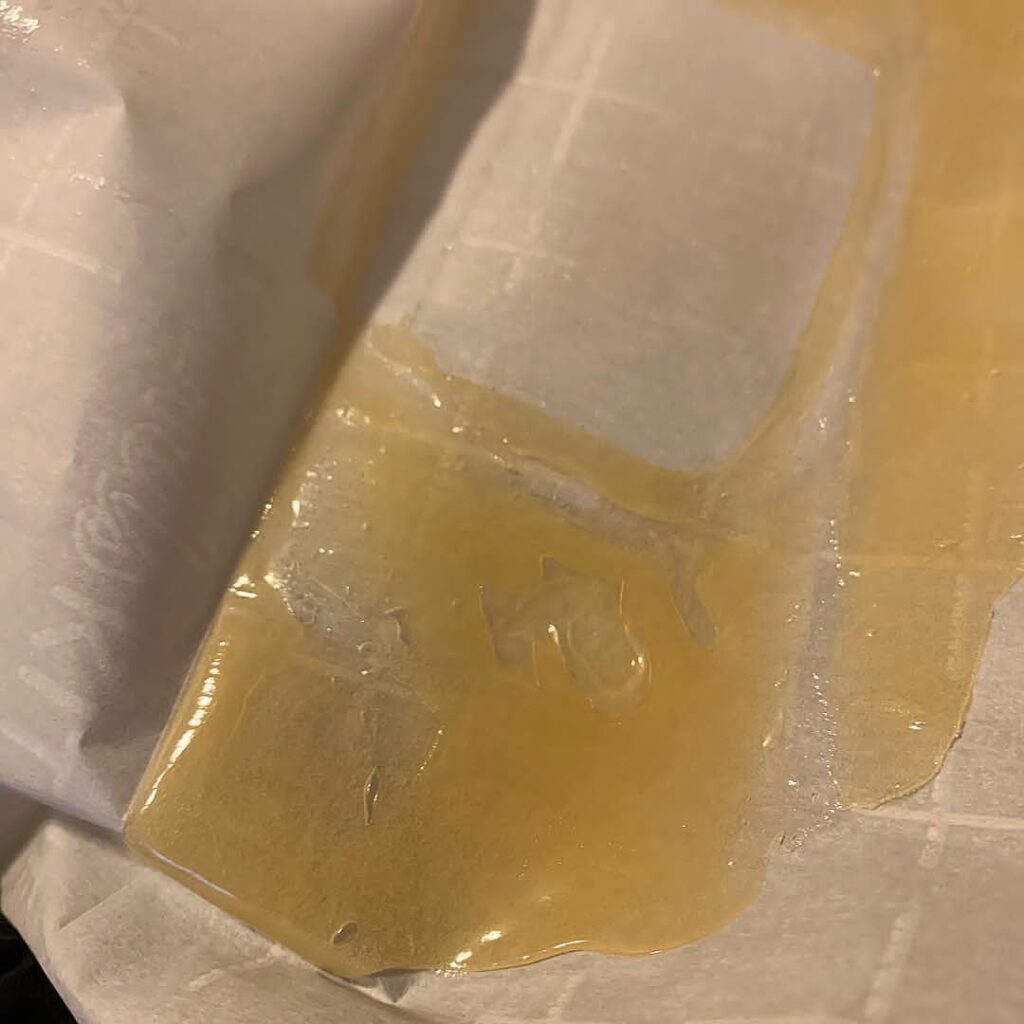
Rosin pressing fresh buds sounds simple on paper, but it’s actually one of the most demanding parts of solventless production. Temperature, pressure, and press time all have to be dialed in for the specific hash you’re working with, because every batch of bubble hash behaves a little differently depending on the cultivar, the wash, and the micron range used. Press too hot and you scorch delicate terpenes before they ever make it into the final product. Press too light and you leave yield sitting in the bags. Getting this step right is the whole foundation for everything that happens next, including the cure.
So how to cold cure fresh press rosin actually happen once the pressing is done? The fresh rosin gets scooped straight off the parchment and into sealed glass jars. Those jars go into a temperature-controlled space, usually somewhere between 50 and 60 degrees Fahrenheit, and they stay there anywhere from a few days to a few weeks depending on the batch and the texture we’re aiming for. During that window, something changes at a molecular level. Cannabinoids and residual waxes inside the rosin start to slowly crystallize, a process called nucleation, and the terpenes redistribute themselves more evenly through the material instead of sitting on the surface. The result is a texture shift from glassy and sappy to opaque, creamy, and stable, what most people call badder or batter.
How to cold cure fresh press rosin the right way also means knowing when to stop. Curing too long can push the texture past badder and into a drier, more crumbly state. Curing too short leaves you with something closer to fresh press that hasn’t fully stabilized. We check texture by hand throughout the cure window, and every batch gets pulled the moment it hits the consistency we’re targeting, not on a fixed schedule. That’s part of why no two batches look identical even when they come from the same cultivar.
Pressing fresh frozen rosin is a completely different starting point than pressing dried, cured flower, and it’s worth being clear about that difference since it shapes everything downstream. Fresh frozen material never goes through a standard dry-and-cure cycle, so the plant never has the chance to lose its more volatile monoterpenes the way dried flower naturally does. That’s the entire reason live rosin (rosin made from fresh frozen hash) tends to taste louder and closer to the actual living plant than rosin pressed from cured material. Cured rosin isn’t a lesser product, it’s just a different starting point, usually chosen for cost or availability reasons rather than flavor.
Should you do a rosin press fresh bud straight off the plant, skipping the freeze and wash steps entirely? Short answer: no, and it’s worth explaining why, because this comes up constantly from people trying solventless extraction at home. Fresh bud carries far too much moisture for a clean press. The relative humidity in a freshly cut plant sits way above the range a rosin press needs to work with, and pressing that wet material straight onto parchment gives you a watery, low-yield mess that smells like raw chlorophyll and sizzles instead of melting cleanly on a nail. The right move is either to dry and cure the bud first, or to freeze it fresh and turn it into ice water hash before it ever sees a press plate. Every batch of Fresh Press Rosin for sale here goes through that second route, fresh frozen straight into ice water hash, because that’s the path that actually protects flavor instead of destroying it.
Our rosin quality standards sit on three pillars: input material, wash precision, and cure discipline. Input material means we only source cultivars with proven terpene and cannabinoid density, tested before a full production run ever happens. Wash precision means our bubble hash is separated into specific micron ranges, and only the cleanest, most resin-dense bags make it to the press. Cure discipline means every jar gets watched, checked, and pulled by hand instead of running on autopilot.
Every batch that leaves our facility carries a full certificate of analysis (COA) from an independent, accredited lab. That COA covers cannabinoid content, terpene percentages, and a full safety panel: pesticides, residual solvents, microbials, and heavy metals. Since this is a true solventless product, every single line on the residual solvent panel should read “not detected.” If it doesn’t, that batch doesn’t ship. That’s not a marketing line, that’s the actual bar we test against.
We also want to be upfront about something a lot of people ask before they buy: why does fresh press rosin have no flavor sometimes, even when it’s labeled solventless and premium? It’s almost never the extraction method itself. It’s usually one of three things: the rosin was pressed from lower-quality or improperly dried hash to begin with, it was pressed too hot and the terpenes got cooked off before they ever hit the jar, or it sat around too long in bad storage after purchase and lost its volatile compounds to air and heat. Every one of those failure points is something we control for on our end, from sourcing through packaging, which is why our fresh press rosin for sale carries a COA showing terpene percentages you can actually check against what you’re smelling in the jar.
What you end up with, when the whole process is done right, is a concentrate that tastes like the plant it came from, not like a generic “dab” flavor. That’s the entire promise behind fresh press rosin for sale, and it’s why we walk customers through the process instead of just listing a price and a strain name. 🌿
Product Specifications Table
| Attribute | Details |
|---|---|
| Product Type | Fresh Press / Cold Cure Hash Rosin |
| Extraction Method | Solventless (Ice Water Hash + Heat/Pressure Press) |
| Starting Material | Fresh Frozen Cannabis Flower |
| Cure Method | Cold Cure, 50–60°F, Sealed Glass Jars |
| Cure Duration | 3 days to 3 weeks (batch dependent) |
| Final Texture | Creamy Badder (Batter Consistency) |
| Strain / Cultivar | [Insert current batch strain, see product listing] |
| Classification | Indica, Sativa, or Hybrid (varies by batch, listed per SKU) |
| THC Content | [See current batch COA] |
| CBD Content | [See current batch COA] |
| Total Cannabinoids | [See current batch COA] |
| Terpene Content | [See current batch COA] |
| Residual Solvents | Not Detected (Solventless, Third-Party Verified) |
| Lab Tested | Yes, Independent Accredited Lab |
| Recommended Storage | Airtight, Refrigerated or Cool Dark Space |
Flavor
How to cold cure fresh press rosin correctly shows up first in the flavor. A properly cured batch tastes punchier and more rounded than the same rosin fresh off the press, because curing pulls terpene fractions forward and lets them settle evenly through the material instead of sitting unevenly on the surface. Depending on the cultivar in your current batch, expect flavor notes ranging from citrus and pine to gas and spice, all sitting on top of a clean, non-chemical base note that only comes from true solventless extraction. There’s no butane aftertaste, no bitter chemical edge, just the plant.
Aroma
Crack a jar of properly cold cured rosin and the aroma hits before you even get close to a dab tool. 👃 A well-cured batch smells deep and rounded, closer to the strain’s true character than fresh press typically delivers straight off the parchment. Fresh press can smell brighter and more immediate, almost green, while cold cure smells fuller and more settled, the same way a properly cured jar of flower smells different from a freshly chopped plant.
Inhale & Exhale Experience
Inhale: Smooth, terpene-forward, with the specific flavor notes of your current batch’s cultivar coming through clean and identifiable. A true solventless product shouldn’t cough you with any harsh chemical bite.
Mid-hold: This is where cold cured rosin separates itself from fresh press. The flavor holds steady and layered instead of flashing bright and fading fast.
Exhale: A rounded, full finish that lingers without turning harsh, closing out with the same strain-true character you got on the inhale.
Details for Fresh Press Hash Rosin for Sale
Fresh press rosin for sale through us rotates by batch and cultivar availability, since we don’t run the same strain year-round. Each listing includes the current strain, classification, THC range, and terpene data straight from that batch’s COA, so what’s on the page matches what’s in the jar. We list both fresh press (uncured, glassy, immediate flavor) and cold cured (badder texture, more stable, rounder aroma) options when both are available from the same wash, so you can pick based on how you actually plan to use it.
Features
- 🧊 True solventless extraction, ice water hash only, no butane or CO2
- 🔬 Independent third-party lab testing on every batch
- 🌿 Fresh frozen starting material for maximum terpene preservation
- ⏱️ Hand-monitored cold cure, pulled by texture, not by fixed timer
- 📋 Full COA published per batch, including residual solvent panel
- 🚫 No additives, no cutting agents, no flavoring
- 📦 Packaged airtight to protect the cure once it reaches your door
Rosin Quality Details
Quality control for fresh press rosin for sale starts before the plant is even harvested. We pre-test cultivars with small hash washes before committing to a full production run, checking yield, purity, and flavor against our internal bar. Once a cultivar clears that bar, the full wash goes through graded micron screens, and only the highest-grade bubble hash (the cleanest, most resin-dense material) makes it to the press. Lower grade material either gets reworked or discarded, it doesn’t get blended into a premium batch to pad yield.
Pressing itself happens at controlled, cultivar-specific temperature and pressure settings, since every hash grade responds differently under the plates. From there, the cure is monitored by hand daily, checking color, texture, and aroma until the batch hits target consistency. Every finished batch gets sent out for full-panel lab testing before it’s approved for sale, covering cannabinoids, terpenes, pesticides, residual solvents, microbials, and heavy metals.
Terpene Profile
📊 WORD INFOGRAPHIC: What Shapes Fresh Press Rosin Terpene Content
TERPENE PRESERVATION FACTORS , COLD CURE ROSIN
--------------------------------------------------
❄️  Flash-Freeze Timing ....... Locks in monoterpenes pre-press
🧊  Wash Temperature ........... Cold ice water protects trichomes
🔥  Press Temp/Pressure ........ Too hot = terpene loss at the source
🕐  Cure Duration .............. Redistributes terpenes evenly
📦  Post-Purchase Storage ...... Determines long-term flavor retention
--------------------------------------------------
Exact terpene percentages vary by batch. Check your jar's COA.
Terpene content and dominant terpenes shift batch to batch since we rotate cultivars, but every jar’s COA will list the specific terpenes present and their percentages. In general, fresh frozen starting material preserves a wider range of monoterpenes (the lighter, brighter top-note terpenes like limonene and pinene) than cured-flower rosin does, since those compounds are the first casualties of a standard dry-and-cure cycle. That’s the terpene advantage baked into rosin pressing fresh buds through the fresh-frozen-and-wash method instead of pressing from dried material.
Product Highlights
✅ True solventless hash rosin, ice water extraction only ✅ Cold cured for a stable, flavorful badder texture ✅ Full COA per batch, including residual solvent panel ✅ Rotating small-batch cultivars, strain-specific data on every listing ✅ No additives, no cutting agents ✅ Independent, accredited third-party lab testing ✅ Packaged to protect flavor from harvest through delivery
Why Customers Choose Fresh Press Rosin
Customers come back to fresh press rosin for sale here for reasons that hold up under scrutiny, not just marketing language.
They want to actually taste the strain. Solventless extraction, done right, gets you closer to the plant’s real flavor than almost any solvent-based method, and cold curing takes that a step further by letting the flavor settle and round out instead of fading fast.
They trust the lab data. Every batch ships with a real COA from an independent lab, not an in-house test result. If potency or terpene content is your main deciding factor, that number is right there before you buy.
They know the difference between fresh press and cold cure, and want the choice. Some customers prefer fresh press for its bright, immediate flavor. Others prefer cold cure for its stability and rounded aroma. We sell both when a batch allows it, instead of forcing one texture on everyone.
They care how it was made. Understanding how to cold cure fresh press rosin, and knowing it starts with fresh frozen flower instead of dried bud, matters to a growing number of solventless buyers who want transparency, not just a jar with a strain name on it.
Troubleshooting and Common Questions About Fresh Press Rosin
Why does fresh press rosin have no flavor? This is one of the most common questions we get, so let’s answer it directly. If a jar of fresh press rosin tastes flat or weak, the cause is almost always one of three things: the hash it came from wasn’t graded high enough to begin with, the press ran too hot and cooked off the volatile terpenes before curing ever started, or the jar sat too long in bad storage (heat, light, or an unsealed lid) after purchase. Why does fresh press rosin have no flavor is rarely a question about the extraction method itself, since solventless extraction is designed to preserve flavor better than most alternatives. It’s almost always a sourcing, pressing, or storage issue somewhere along the chain.
Should you do a rosin press fresh bud without freezing or washing it first? No. Fresh, unfrozen bud carries too much moisture for a clean press, and pressing it straight off the plant gives you a low-yield, watery result with a raw, chlorophyll-heavy flavor instead of the clean, terpene-forward taste people expect from rosin. Should you do a rosin press fresh bud is a question with a clear answer once you understand the moisture issue: dry and cure it first, or freeze it and wash it into hash first. Pressing wet, fresh-cut bud skips both of those necessary steps.
What’s the actual difference in rosin pressing fresh buds versus pressing dried flower? Rosin pressing fresh buds (meaning flash-frozen, then washed into hash before pressing) captures a wider terpene range than pressing dried, cured flower, because the plant never goes through the natural terpene loss that happens during a standard dry-and-cure cycle. Rosin pressing fresh buds is the foundation of what people call “live rosin,” and it’s the starting point for everything we cold cure.
Is pressing fresh frozen rosin harder than pressing cured hash? It takes more precision, not necessarily more difficulty. Pressing fresh frozen rosin requires tighter control over press temperature and pressure since fresh frozen hash tends to be more terpene-rich and more sensitive to heat than hash made from cured flower. Get those settings wrong and you lose exactly the flavor advantage you were chasing by going fresh frozen in the first place. Pressing fresh frozen rosin correctly is really the whole reason our fresh press rosin for sale tastes the way it does.
Storage Instructions
Store your fresh press or cold cured rosin in its original airtight jar, in a cool, dark place away from direct light and heat. Refrigeration extends shelf life and helps preserve terpene content longer, especially for fresh press rosin that hasn’t gone through a full cold cure yet. If refrigerating, let the sealed jar return to room temperature before opening to avoid condensation. Avoid repeated temperature swings (fridge to counter to fridge) since that kind of cycling is one of the more common reasons customers report flavor fading faster than expected. Reseal the lid immediately after every use. ❄️
Usage Tips
- Dabbing: Low-temp dabs preserve the most terpene flavor. Higher temps burn cleaner but sacrifice some of the nuance you’re paying a premium for.
- Handling fresh press: Fresh press rosin is soft and sticky. Chilling the jar briefly before scooping firms it up and makes it easier to portion.
- Handling cold cure: Cold cured badder scoops clean at room temperature and doesn’t require chilling first.
- Tool choice: A non-stick dab tool (titanium or ceramic tip) works best for both textures, especially fresh press, which can stick to plain metal tools.
- Tasting notes: Try a small dab cold, straight from the fridge, then again at room temperature. Temperature changes how much aroma reaches your nose before you even inhale.
Comparison vs Similar Concentrates
| Type | Texture | Starting Material | Best For |
|---|---|---|---|
| Fresh Press Rosin | Glassy, sappy, amber-glass | Fresh frozen hash | Buyers who want the brightest, most immediate flavor |
| Cold Cure Rosin | Creamy badder | Fresh frozen hash, cured | Buyers who want stability plus rounded, deep flavor |
| Cured Rosin | Varies, often drier | Dried and cured flower | Buyers prioritizing cost or availability over peak flavor |
| Live Resin | Sap, sauce, or crumble | Fresh frozen flower, solvent extracted | Buyers open to hydrocarbon extraction for similar flavor goals |
| Rosin Jam | Glossy, semi-liquid with visible crystals | Cold cure badder, secondary warm cure | Buyers who want maximum visual terpene separation |
Frequently Asked Questions
1. How to cold cure fresh press rosin at home if I already have fresh press? Seal it in an airtight glass jar and store it at a stable 50 to 60°F for several days to a few weeks, checking texture periodically until it turns creamy and opaque.
2. Why does fresh press rosin have no flavor sometimes even when it’s labeled premium? Usually low-grade starting hash, an overheated press run, or poor storage after purchase. All three are avoidable with the right sourcing and handling.
3. Should you do a rosin press fresh bud straight off the plant? No. Fresh bud has too much moisture. Dry and cure it first, or freeze and wash it into hash before pressing.
4. What’s the difference between rosin pressing fresh buds and pressing cured flower? Rosin pressing fresh buds (flash-frozen, then washed into hash) preserves more of the plant’s original terpene range than pressing dried, cured material.
5. How long does the cold cure process actually take? Typically 3 days to 3 weeks depending on the batch, the hash quality, and the texture being targeted.
6. Is cold cure rosin stronger than fresh press? Not necessarily. Potency depends on the starting hash and press technique, not the cure. Curing changes texture and flavor stability, not THC percentage in any meaningful way.
7. Can I cure fresh press rosin myself after buying it? Yes. As long as you have a sealed jar and a stable, cool storage spot, you can cure fresh press rosin at home following the same process described above.
8. Why is fresh press rosin so sticky and hard to handle? It hasn’t gone through nucleation yet, so the terpenes are still highly volatile and the texture stays soft. Chilling it briefly before use makes it easier to scoop.
9. Is pressing fresh frozen rosin better than pressing dried hash? It generally preserves more terpene content, since fresh frozen material skips the natural terpene loss that happens during drying and curing.
10. Does every batch of fresh press rosin for sale come with lab results? Yes. Every batch ships with a certificate of analysis from an independent, accredited lab covering cannabinoids, terpenes, and a full safety panel.